
Appetizers
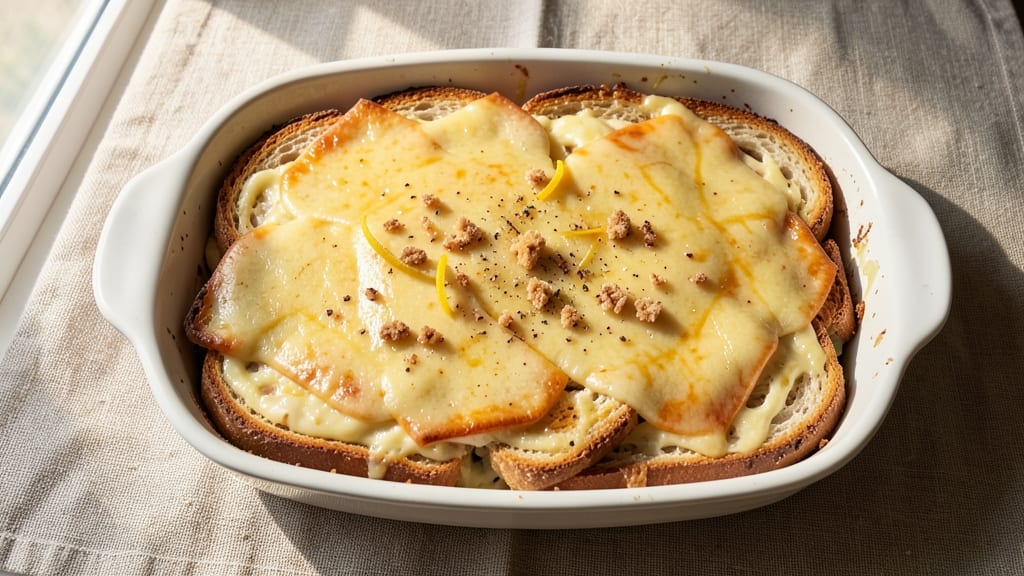
This basic cheese strata recipe transforms stale bread into golden, fluffy layers of custard and melted cheese that disappear faster than you can say "breakfast."
The secret lies in the perfect balance of eggs, milk, and sharp cheddar—creating a dish so satisfying, it feels like a restaurant-quality brunch without the fuss. I developed this version after years of perfecting the technique, ensuring every bite delivers that ideal mix of creamy custard and crispy edges.
What makes this recipe truly foolproof is the 350°F bake that transforms simple ingredients into a showstopping dish in just 40 minutes. The custard mixture soaks into the bread while baking, creating those signature fluffy layers, while the cheese melts into gooey perfection.
No fancy techniques required—just a few staples, a baking dish, and patience for the custard to set properly before slicing.
The result is a dish that’s rich, comforting, and endlessly versatile—serve it as a hearty breakfast, brunch centerpiece, or even a savory side for dinner. Add cooked bacon, fresh herbs, or a sprinkle of paprika for extra flavor, or keep it classic with just cheese and eggs.
The best part? Leftovers reheat beautifully, making it perfect for meal prep.
Whether you're feeding a crowd or treating yourself to a lazy weekend breakfast, this strata delivers restaurant-quality results with minimal effort. The golden-brown crust, creamy custard, and melty cheese layers make it impossible to resist. Let’s get baking!
Ingredients for basic cheese strata
Golden layers of custard and melty cheese await—just these 11 essentials transform stale bread into brunch perfection.
| Ingredient | Amount | Notes |
|---|---|---|
| Stale Bread 🍞 | 12 oz | Day-old loaf, crusts removed |
| Large Eggs 🥚 | 6 whole | Room temperature preferred |
| Whole Milk 🥛 | 2 cups | Full-fat for creaminess |
| Sharp Cheddar Cheese 🧀 | 2 cups | Shredded, block preferred |
| Heavy Cream 🥛 | ½ cup | Full-fat for richness |
| Granulated Sugar 🍚 | 2 tbsp | Balances custard sweetness |
| Salt 🧂 | 1 tsp | Diamond Crystal preferred |
| Black Pepper 🌶️ | ½ tsp | Freshly cracked preferred |
| Nutmeg 🌿 | ¼ tsp | Freshly grated for warmth |
| Unsalted Butter 🧈 | 2 tbsp | Melted for greasing |
| All-Purpose Flour 🌾 | 1 tbsp | For thickening custard |
The bread is your foundation—stale is key (fresh bread gets soggy). Sourdough or French bread holds up best, but any loaf works. I always grab day-old from the bakery section at Whole Foods or Trader Joe's—their crusty loaves are perfect. If you're using a baguette, tear it into irregular chunks for better texture. The cheese? Sharp cheddar is non-negotiable here—Cabot or Tillamook are my go-tos, but any aged variety with good melt will work. Pre-shredded cheese has anti-caking agents that prevent proper melting, so grate your own from a block if possible.
No sharp cheddar? Pepper jack or Gruyère add fantastic depth. Running short on eggs? Substitute with 1 cup of Greek yogurt—it adds tanginess but keeps the custard structure. The heavy cream can be swapped for half-and-half if you're watching fat content, though the texture won't be quite as rich. For a vegetarian twist, add sun-dried tomatoes or spinach to the custard mixture. The nutmeg is subtle but essential—if you're out, a pinch of cinnamon works in a pinch (literally). And if you're prepping ahead, make the custard mixture a day in advance—it actually tastes better after resting!
This strata is a make-ahead dream—assemble the dish up to 24 hours ahead and refrigerate uncovered (the custard needs to set). Bake straight from the fridge for extra golden edges. Leftovers keep for 4 days in the fridge, and freezes beautifully for up to 3 months—just reheat at 300°F until warmed through. For meal prep, portion into individual ramekins before baking—each serves as a perfect single portion. The best part? The flavor actually improves after the first day as the custard sets further. Store in an airtight container with a damp paper towel on top to keep it moist.
Why You'll Love This Recipe
- No-Waste Magic: I swear by this for using up that crusty loaf from last week—no sad bread bin here. Toss in whatever stale bread you’ve got (French, sourdough, even baguette scraps), and suddenly it’s purposeful.
- Creamy Sharp Bite: That sharp cheddar? It’s the star—melty, tangy, and just salty enough to make every bite sing. The heavy cream and milk turn it into this rich, custardy cloud, but the cheese keeps it from being too heavy.
- Breakfast for Dinner: I make this for lazy Sundays, potlucks, or when I need a hearty meal in 10 minutes. Serve it warm with a side salad or cold for sandwiches the next day—it’s that adaptable.
- Budget Breakfast Win: Eggs, milk, and cheese are cheap staples, and this feeds four for under $8. Plus, leftovers reheat beautifully—just pop them back in the oven until bubbly. My wallet (and my family) thank me.
Step-by-step instructions for cheese strata
Here's how to create layers of custardy perfection with melty cheese—simple steps for restaurant-quality results.
Prepare the Custard Mixture
In a large bowl, whisk together the 6 whole large eggs until no streaks remain. Add the 2 cups whole milk, 0.5 cup heavy cream, 2 tbsp granulated sugar, 1 tsp salt, 0.5 tsp black pepper, and 0.25 tsp nutmeg. Whisk until fully combined and smooth. This mixture should be pale yellow and homogeneous—no lumps allowed. I like to strain it through a fine-mesh sieve to ensure absolute smoothness, especially if using block cheese that might have stringy bits.
In a separate small bowl, whisk together the 1 tbsp all-purpose flour and 2 tbsp melted unsalted butter until smooth. This slurry will help thicken the custard and create that signature strata texture. Gradually pour this mixture into the egg mixture while whisking constantly. The custard should now have a velvety consistency, almost like a thick batter. Taste it—it should be slightly sweet and seasoned, but not overly salty. If needed, adjust the seasoning now, but remember the cheese will add significant saltiness later.
Assemble the Strata Layers
Grease a 9x13-inch baking dish generously with butter, using a paper towel to spread it evenly along the bottom and sides. This prevents sticking and ensures easy removal later. Tear the 12 oz stale bread into 1-inch cubes—don't worry about perfect uniformity, just even-sized pieces. The bread should be completely dry; if it feels damp, pat it with a clean towel to remove any excess moisture.
Arrange half of the bread cubes in the prepared baking dish, spreading them evenly across the bottom. Pour half of the custard mixture over the bread, allowing it to seep into the cubes. Sprinkle 1 cup of the shredded sharp cheddar cheese evenly over the custard-soaked bread. Repeat the process with the remaining bread cubes, custard, and cheese. The layers should be compact but not overly packed—just enough to create distinct strata when baked. Press down very gently to help the bread absorb the custard fully.
Bake to Golden Perfection
Preheat your oven to 350°F. Place the assembled strata on the middle rack and bake for 35-40 minutes. The strata is ready when the top is golden brown and the center is just set—it should still have a slight jiggle when gently shaken. Here's the thing: overbaking is the easiest mistake to make. The strata will continue cooking slightly as it rests, so pull it out when the edges are set but the center still has a slight custardy give.
For the final touch, broil the strata for 1-2 minutes on high heat. Watch it closely—you want the cheese to turn golden and bubbly, not burn. This step adds that perfect toasted flavor to the top layer. Remove from the oven and let it rest for 10 minutes before serving. This resting time allows the layers to set properly and makes slicing much cleaner. The result should be fluffy, custardy layers with melty cheese throughout—every bite should be creamy, rich, and perfectly seasoned.
Pro Tips For Making Basic Cheese Strata
- Cube Bread Small: Cut your stale bread into ½-inch cubes—no bigger, no smaller. I learned this the hard way: larger chunks stay gummy, while smaller ones dry out. Uniform size means even cooking, and that’s the thing that matters most for strata texture.
- Whisk Eggs Cold: Chill your eggs and milk mixture in the fridge for 10 minutes before pouring over the bread. Cold liquid keeps the bread from absorbing too fast, so the strata doesn’t turn into a soggy mess. (Yes, even if you’re impatient like me.)
- Skip the Pre-Cooked Cheese: Use freshly shredded sharp cheddar—no pre-shredded stuff. The anti-caking agents in pre-shredded cheese make the strata grainy and less melty. If you’re short on time, grate it yourself or buy a block and shred it fresh.
- Bake Low and Slow: Cover the strata with foil for the first 30 minutes, then uncover and bake until golden. The foil traps steam for even cooking, while the final uncovered stretch gives you that perfect crust. Overlooking this step means a dry top and a gummy center—neither of which you want.
Pro cooking tips for this recipe
Custard Consistency
Your custard is the backbone of this strata, so getting it right is everything. Whisk the eggs, milk, and cream until completely smooth—no streaks or lumps. I like to use a hand mixer for 30 seconds to ensure absolute homogeneity.
The flour-butter slurry thickens the custard and prevents a watery texture. Taste it before baking—it should be slightly sweet and seasoned, but not overly salty since the cheese will add saltiness. If it tastes bland, a pinch of extra pepper or nutmeg can elevate it. 💛
Bread Layering
Even distribution of bread cubes is key for consistent baking. Use 1-inch cubes for uniform cooking, but don’t stress about perfect shapes—just even-sized pieces. Press the bread cubes gently into the custard to help them absorb fully.
I like to use a light touch with my fingers, just enough to encourage the custard to seep in without compacting the layers too tightly. This creates those signature fluffy pockets when baked.
Cheese Placement
Sprinkle the cheese evenly between layers to ensure every bite has that melty goodness. I recommend sharp cheddar for its bold flavor and excellent melt, but Gruyère or pepper jack work beautifully too. Avoid pre-shredded cheese—it contains anti-caking agents that prevent proper melting.
Instead, grate your own cheese from a block for the best results. For extra richness, add a sprinkle of cheese on top before baking.
Baking Time
Bake at 350°F for 35-40 minutes until the top is golden brown and the center has a slight jiggle. Overbaking is the easiest mistake—pull it out when the edges are set but the center still has a custardy give.
The strata will continue cooking slightly as it rests. For that perfect golden crust, broil for just 1-2 minutes on high heat at the end. Watch closely to avoid burning!
Resting Period
Never skip the 10-minute rest after baking. This allows the layers to set properly, making it easier to slice cleanly. The custard will firm up slightly, and the cheese will meld into creamy perfection.
If you’re in a hurry, you can serve it immediately, but the texture won’t be as ideal. Trust me, the wait is worth it for that restaurant-quality finish. ✨
Broiling Trick
Broiling for the final 1-2 minutes adds that irresistible golden-brown crust and enhances the cheese’s flavor. Place the strata on the middle rack of your broiler, about 4 inches from the heat source. Keep a close eye on it—cheese burns faster than you think!
This step is optional but elevates the dish from good to showstopping. The aroma alone will have everyone rushing to the table. 🔥
Nutrition facts
Frequently asked questions
Can I use fresh bread instead of stale bread?
Fresh bread is too moist and will make your strata soggy. The ideal texture comes from stale bread that absorbs the custard perfectly. If you only have fresh bread, dry it out by spreading slices on a baking sheet in a 200°F oven for 10-15 minutes until completely dry. This mimics the texture of day-old bread.
How do I prevent the top from getting too brown before the center is cooked?
Cover the strata loosely with aluminum foil after 25 minutes of baking to protect the top while the center finishes cooking. For even more control, tent it with foil and remove it only during the final 5 minutes of baking. This keeps the top from over-browning while ensuring the center sets properly.
What's the best way to reheat leftover cheese strata?
Slice the strata and reheat portions in a 350°F oven for 10-15 minutes until warmed through. For quick reheating, use the microwave on 50% power for 1-2 minutes, covered with a damp paper towel to prevent drying. Avoid high heat—it can make the bread rubbery and the custard grainy.
Can I make this recipe without dairy?
Yes! Replace the milk and heavy cream with unsweetened almond milk or coconut milk, and use nutritional yeast or vegan cheese instead of cheddar. The custard will be lighter, but the technique remains the same. For richness, add 1 tbsp cornstarch to the custard mixture to help it set properly.
Why did my strata turn out dense instead of fluffy?
Overmixing the custard or using too much flour can create a dense texture. Ensure your custard is smooth but not whipped, and stick to the 1 tbsp flour measurement. Also, avoid pressing the bread layers too tightly—let the custard absorb naturally. Baking at 350°F is key; higher heat can cause the custard to set too quickly and lose its fluffiness.