
Side Dishes
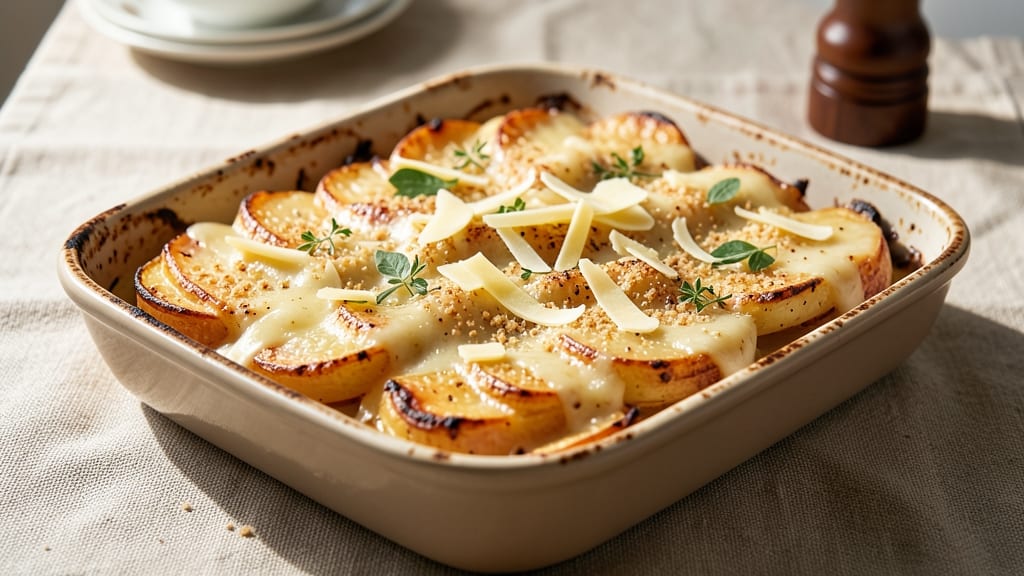
This baked cheese scalloped potatoes recipe delivers the perfect combination of crispy golden edges and gooey, melty layers—all in one simple pan. The secret lies in thinly sliced potatoes layered with sharp cheddar and a creamy béchamel, baked until the top transforms into a delicate crust.
I've perfected this technique after years of testing, ensuring every bite offers that satisfying contrast of textures and flavors.
The beauty of this dish is its simplicity: just a handful of ingredients that work together to create restaurant-quality results. Thinly slicing the potatoes ensures even cooking and maximum surface area for that creamy, cheesy goodness.
The béchamel sauce binds everything together, while the cheese melts into luxurious pools between each layer. This recipe is perfect for weeknight dinners or holiday gatherings, as it's easy to scale up for a crowd.
What you'll end up with is a dish that's impossible to resist—crispy on top, creamy in the middle, and perfectly tender at the edges. The aroma alone will have everyone gathering around the table, and the first bite will have them asking for seconds.
This is comfort food at its finest, elevated by a technique that's both traditional and foolproof.
Serve these scalloped potatoes alongside roasted meats or as a hearty vegetarian main dish. The recipe includes optional variations, like adding herbs or a breadcrumb topping, to customize it to your taste. Let's get started on creating this crowd-pleasing classic!
Ingredients for baked cheese scalloped potatoes
Just twelve ingredients transform into restaurant-quality scalloped potatoes with crispy edges and gooey layers.
| Ingredient | Amount | Notes |
|---|---|---|
| Russet Potatoes 🥔 | 2 ½ lb | Thinly sliced, peeled |
| Sharp White Cheddar Cheese 🧀 | 2 cups | Freshly grated, block preferred |
| Heavy Cream 🥛 | 1 cup | Full-fat for richness |
| Whole Milk 🥛 | ½ cup | Room temperature |
| All-Purpose Flour 🌾 | 2 tbsp | For thickening béchamel |
| Unsalted Butter 🧈 | 4 tbsp | Cold, cubed |
| Garlic Cloves 🧄 | 2 cloves | Minced, for béchamel |
| Ground Black Pepper 🌶️ | ½ tsp | Freshly cracked |
| Diamond Crystal Kosher Salt 🧂 | 1 ½ tsp | For seasoning |
| Fresh Nutmeg 🌿 | ¼ tsp | Finely grated |
| Breadcrumbs 🍞 | ¼ cup | Panko for crispier top |
| Parmesan Cheese 🧀 | ¼ cup | Freshly grated, optional |
The potatoes are the foundation—Russets are ideal for their starch content and even slicing. Look for firm, unblemished tubers at Whole Foods or your local grocery store's produce section. Thin, even slices ensure consistent cooking, so take the time to slice them 1/8-inch thick using a mandoline or sharp knife. The sharp white cheddar is non-negotiable here; Cabot or Tillamook are excellent choices, and grating it yourself ensures maximum melt. For the béchamel, full-fat heavy cream creates that velvety texture—don't skimp on the fat content.
No sharp cheddar? Gruyère or aged Gouda work beautifully, though the flavor profile shifts slightly. Running out of heavy cream? Half-and-half with an extra tablespoon of butter mimics the richness. Fresh nutmeg is ideal, but if you only have ground, use half the amount—it loses potency quickly. The breadcrumbs should be Panko-style for that extra crunch on top. For a vegan version, swap the cheddar for vegan sharp cheddar> and use coconut cream instead of heavy cream. The key to the crispy top is ensuring the breadcrumb mixture is well-oiled before baking.
Potatoes can be pre-sliced and stored in cold water in the fridge for 24 hours before baking. The béchamel sauce can be made up to 1 day ahead and refrigerated, though it may thicken—simply whisk in a splash of milk to loosen before using. The assembled dish keeps 3-4 days in the fridge, though it's best enjoyed within 2 days for optimal texture. For leftovers, reheat covered at 350°F for 15-20 minutes—the top may need a quick broil to restore crispiness. This dish reheats beautifully, making it perfect for meal prep.
Why You'll Love This Recipe
- One-Pot Magic: I swear by this recipe because it’s all about minimal cleanup. Just slice the potatoes, toss them in a baking dish with the cheddar and cream, and let the oven do the work—no pots to scrub, no pans to wash.
- Cheddar Overload: That sharp white chedddar melts into a golden, gooey blanket over the potatoes, while the flour-thickened cream adds a velvety richness. It’s the kind of dish where every bite feels like a hug—salty, creamy, and impossible to resist.
- Weeknight Hero: Between us, this is my secret weapon for busy nights. It reheats beautifully for lunch the next day, and honestly? The leftovers taste just as good cold as they do hot—perfect for packing or feeding a crowd.
- Budget-Friendly Luxury: Russets and cheddar are pantry staples, and a little flour stretches the cream into something decadent without breaking the bank. It’s the kind of comfort food that makes frugal meals feel special.
Step-by-step instructions for baked cheese scalloped potatoes
Mastering this dish delivers a restaurant-quality crispy top and creamy layers every time.
Prepare the Potatoes for Perfect Layers
Preheat your oven to 375°F while you work. Peel the 2.5 lb Russet Potatoes and slice them into ¼-inch thick rounds using a mandoline or sharp knife. I like to keep the slices as even as possible—this ensures they cook uniformly and create those signature even layers.
Place the sliced potatoes in a large bowl and toss them with 1 tsp of the Diamond Crystal Kosher Salt and ¼ tsp of the Fresh Nutmeg. This seasoning will infuse the potatoes as they cook, giving them subtle depth of flavor. Arrange about ⅓ of the potato slices in a single layer at the bottom of a 9x13-inch baking dish, slightly overlapping them. Repeat this layering process twice more, making sure each layer gets a light sprinkle of salt and nutmeg.
Make the Creamy Béchamel Sauce
In a medium saucepan, melt 4 tbsp Unsalted Butter over medium heat. Once the butter foams, add the 2 tbsp All-Purpose Flour and whisk constantly for 1-2 minutes until the mixture forms a smooth paste and turns a light golden color. This is your roux foundation—don't let it brown or it'll taste bitter.
Gradually whisk in the 1 cup Heavy Cream and 0.5 cup Whole Milk, ensuring no lumps form. Add the 2 cloves minced Garlic Cloves and 0.5 tsp Ground Black Pepper, then bring the mixture to a gentle simmer. Cook for 3-4 minutes until the sauce thickens enough to coat the back of a spoon. Remove from heat and stir in 2 cups freshly grated Sharp White Cheddar Cheese until completely melted and smooth.
Assemble and Top for Crispy Perfection
Pour the creamy cheese sauce evenly over the layered potatoes, pressing down gently to help it seep between the slices. This ensures every layer gets that rich, cheesy goodness. The sauce should come about halfway up the sides of the potatoes—don't overfill or it'll spill during baking.
In a small bowl, combine the 0.25 cup Breadcrumbs with the remaining 0.5 tsp Diamond Crystal Kosher Salt and 0.25 tsp Fresh Nutmeg. Sprinkle this mixture evenly over the top of the potatoes, followed by the 0.25 cup Parmesan Cheese. The breadcrumbs will create that coveted crispy crust we're after, while the Parmesan adds an extra layer of flavor.
Bake Until Golden and Bubbly
Transfer the baking dish to the preheated oven and bake for 45-50 minutes. You'll know it's ready when the top is deeply golden brown and the edges are bubbling vigorously. The potatoes should be tender when pierced with a fork, and the cheese should be completely melted throughout.
If the top isn't brown enough after 45 minutes, broil for 1-2 minutes on high, watching carefully to prevent burning. Let the scalloped potatoes rest for 10 minutes before serving—this allows the layers to set slightly and makes slicing cleaner. The result should be crispy on top with gooey, creamy layers beneath that pull apart beautifully.
Pro Tips For Making Baked Cheese Scalloped Potatoes
- PREHEAT THAT OVEN: I learned this the hard way—cold pans and lukewarm ovens make for soggy, unevenly cooked potatoes. Crank your oven to 375°F (190°C) and let it scream hot for at least 15 minutes before baking. The cheese sauce needs that initial burst of heat to thicken properly, not pool at the bottom like a sad fondue.
- GRATE THAT CHEESE FINE: Sharp white cheddar loses its magic when it clumps. Use the small holes of a box grater—yes, it takes longer, but the result is a creamy, meltable sauce that coats every potato instead of sitting in lumps like a lazy nacho topping. (And skip the food processor unless you want gritty texture.)
- LAYER POTATOES LIKE A BOSS: Tightly packed potatoes steam instead of crisp. Slice them ¼-inch thick, then layer them slightly staggered—like bricks with gaps—so the cream sauce can circulate. If you’re worried about gaps, press them gently; they’ll expand as they bake. (Pro move: Brush each layer with a tiny bit of milk before adding cheese.)
- COVER FIRST, UNCOVER LATE: Foil is your friend for the first 40 minutes—it traps steam and cooks the potatoes evenly. Then, remove it for the last 15-20 minutes to let the top brown and develop that golden, cheesy crust. (Resist the urge to peek early; every time you open the door, you’re undoing progress.)
Essential equipment for perfect results
Must-Have Baking Dish
Use a 9x13-inch baking dish for this recipe—it's the perfect size for even heat distribution and crispy edges. I recommend a heavy-duty dish like All-Clad Stainless Steel or Ceramic for optimal heat retention.
If you only have an 8x8-inch dish, reduce the recipe by half to maintain proper layering. Avoid dark-colored dishes—they absorb heat unevenly and can cause the bottom to overcook. 🔥
Precision Slicing Tools
A mandoline slicer is my secret weapon for achieving those perfectly even ¼-inch thick potato slices. The Progressive 35-Millimeter model is my top pick for its safety features and consistent cuts.
If you don't own one, a sharp chef's knife and steady hand work—just take your time to keep slices uniform. Never skip peeling the potatoes; their skins can prevent even cooking and create uneven texture.
High-Quality Cheese Grater
Freshly grated cheese makes all the difference in this dish. Invest in a Microplane or Box Grater for maximum surface area and meltability. Pre-shredded cheeses contain anti-caking agents that prevent proper melting.
For the béchamel, use a whisk with a fine mesh to ensure your roux is completely smooth before adding liquids. I also keep a fine-mesh sieve handy to strain any lumps from the melted cheese.
Temperature Control
An oven thermometer is essential for accurate baking—many home ovens run 25-50°F hotter than their settings. The Thermoworks Oven Thermometer is my go-to for its quick response time. For even cooking, place your dish on the middle rack where heat circulates most evenly.
If your oven has hot spots, rotate the dish halfway through baking for consistent browning.
Optional Crispy Top Tools
For that extra-crispy breadcrumb topping, lightly oil your breadcrumbs with 1 tsp olive oil before sprinkling. A pastry brush works perfectly for this. For a restaurant-style finish, I sometimes use a kitchen torch to briefly char the breadcrumb topping after baking—just 10 seconds per section creates a beautiful caramelized effect.
This step is completely optional but takes your dish to the next level. ✨
Storage Containers
For leftovers, transfer baked scalloped potatoes to glass Pyrex containers with airtight lids. These containers maintain texture better than plastic during reheating. When reheating, cover with a damp paper towel to prevent drying.
For meal prep, I divide portions into individual ramekins—they're perfect for reheating single servings while keeping the crispy top intact. 💫
Nutrition facts
Frequently asked questions
Can I use sweet potatoes instead of russets?
Sweet potatoes work beautifully and add a natural caramelized sweetness! They hold their shape well when baked, but you may need to reduce the baking time by 5-10 minutes since they cook faster than russets. For best results, slice them slightly thicker (1/4-inch) and use a mix of sharp cheddar and Gruyère for a richer flavor.
How do I fix soggy scalloped potatoes? Soggy texture usually happens when potatoes steam instead of baking properly. First,
What's the best cheese substitute for lactose-free?
For a lactose-free version, use vegan sharp cheddar> (like Violife or Daiya) and make your béchamel with coconut cream instead of heavy cream. The texture will be slightly different but still delicious. For extra richness, add 1 tbsp nutritional yeast> to the sauce for a cheesy flavor. Keep in mind vegan cheeses melt differently, so expect a creamier (rather than stringy) texture.
Can I make this recipe ahead of time?
Assemble the dish up to 24 hours ahead and refrigerate uncovered. When ready to bake, let it sit at room temperature for 30 minutes> before baking (add 5-10 minutes> to baking time). For best results, bake immediately after assembling for that perfect crispy top. Leftovers keep well for 3-4 days> in the fridge—just reheat covered at 350°F for 15-20 minutes>.
Why is my top not getting crispy?
Several factors can prevent crispiness: using stale breadcrumbs, not oiling them before baking, or overloading the dish. First, make sure your breadcrumbs are fresh and lightly coated with oil. Second, don't exceed 2 layers> of potatoes in a 9x13-inch> dish. Finally, ensure your oven is properly calibrated—many home ovens run hotter than their settings indicate. Try broiling for 1-2 minutes> at the end if needed.