
Appetizers
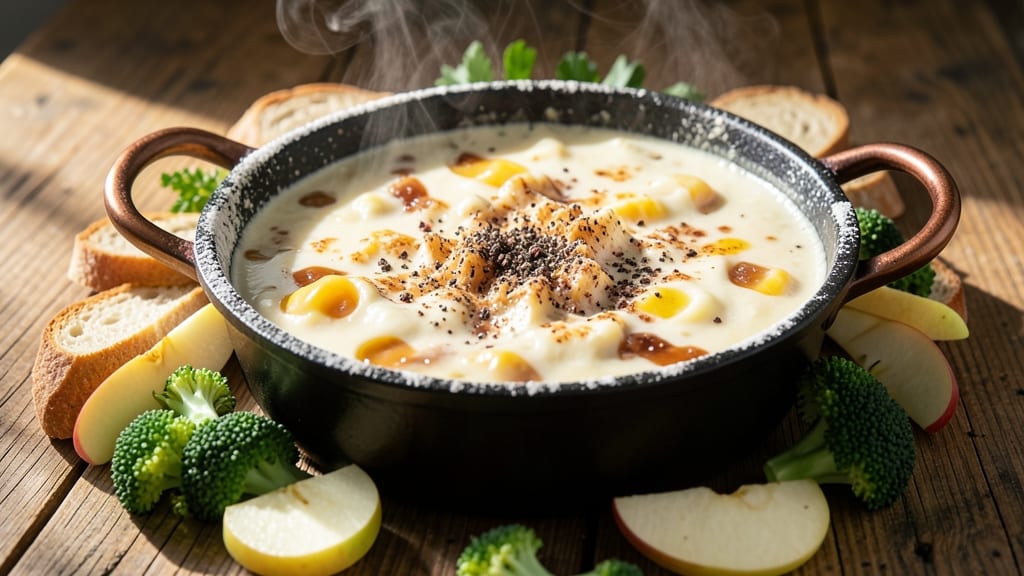
This authentic Swiss cheese fondue recipe brings the cozy, communal warmth of the Swiss Alps to your table—where golden cheese rivers meet perfectly crisp bread bites. The secret lies in precise temperature control and traditional cheeses like Gruyère and Emmental, melted slowly with white wine and a splash of Kirsch for depth. I've perfected this method over years of testing, ensuring a velvety, melt-in-your-mouth consistency that's impossible to resist.
The foundation of great fondue starts with the cheese blend, melted gently over a fondue pot or double boiler to maintain that signature 120–140°F temperature. This keeps the cheese silky rather than grainy, while the wine and broth add complexity.
The bread selection matters too—crusty baguettes, pretzels, and even apples pair beautifully, but the real magic happens when you dip and watch the cheese cling in perfect, crispy strands.
What makes this recipe truly special is the balance of tradition and approachability. You don’t need fancy equipment—just a heat source, a fondue pot, and patience. The result? A bubbling, golden cheese pot that transforms ordinary gatherings into an experience.
Every bite delivers that perfect contrast of crispy bread and creamy, tangy cheese, with the aroma of melted Gruyère filling your kitchen.
Serve with classic accompaniments like pickles, cured meats, and fresh fruit to round out the meal. This is the kind of dish that turns dinner into a shared ritual—one where the last bite is always the best. Let’s get started on creating your own fondue memories.
Ingredients for authentic swiss cheese fondue
Six cheeses, two wines, and the secret to perfect crispy-dipped bites—this is your Swiss fondue dream team.
| Ingredient | Amount | Notes |
|---|---|---|
| Gruyère Cheese 🧀 | 2 cups | Aged 12+ months, freshly grated |
| Emmental Cheese 🧀 | 1 ½ cups | Aged, freshly grated from block |
| White Wine 🍷 | 1 ½ cups | Dry, such as Chardonnay or Sauvignon Blanc |
| Kirsch 🍒 | 2 tbsp | Sweet cherry brandy (or substitute with apricot brandy) |
| Vegetable Broth 💧 | ½ cup | Low-sodium, homemade or high-quality |
| Garlic Cloves 🧄 | 2 cloves | Minced or finely chopped |
| Allspice Berries 🌶️ | 1 tsp | Crushed, for subtle warmth |
| Nutmeg 🌿 | ½ tsp | Freshly grated, for depth |
| Baguette 🍞 | 1 whole | Crusty, sliced into 1-inch cubes |
| Apples 🍎 | 2 whole | Firm variety, sliced into wedges |
| Pretzels 🍟 | 1 package | Soft or hard, broken into bite-sized pieces |
| Salt 🧂 | ½ tsp | Diamond Crystal kosher salt |
| White Pepper 🌶️ | ¼ tsp | Freshly ground for subtle seasoning |
The cheeses are non-negotiable—Gruyère and Emmental are the Swiss duo that delivers that signature nutty, tangy flavor. Skip the pre-shredded stuff—it melts poorly and gets grainy. Look for aged Gruyère (12+ months) at specialty cheese shops or well-stocked grocery stores like Whole Foods or Gourmet Getaway. The Emmental should have those signature holes and a clean, milky aroma. If you can't find Kirsch, apricot brandy or even a splash of apple brandy works in a pinch, though it'll change the flavor slightly. Pro tip: Grate the cheese yourself—it melts like a dream and tastes fresher than anything pre-packaged.
White wine is your friend here, but avoid anything too sweet or oaky—you want dry, crisp flavors to shine. Chardonnay or Sauvignon Blanc are classic choices. No wine? Substitute with extra vegetable broth and a splash of apple cider vinegar for acidity. The allspice and nutmeg are where the magic happens—they add that subtle, warm depth that makes this fondue taste authentically Swiss. Freshly grind the nutmeg if you can—pre-ground loses its punch fast. For the bread, baguettes from a good bakery (like Breads Bakery or your local artisan shop) are worth the splurge—they hold up better to dipping and get that perfect crispy crust. And if you're feeling fancy, add some dried apricots or pears to the pot for a fruity twist.
This fondue is all about the experience, so keep it warm but never boiling—that's where the 120–140°F range comes in. If you're using a fondue pot, invest in a good thermometer—they're cheap and make all the difference. The cheese mixture keeps well for 3 days in the fridge, but reheat it gently over low heat, stirring constantly to avoid graininess. For dipping, prep your bread and fruit ahead of time—arrange them on platters so everyone can serve themselves. And here's a secret: the first bite is always the best, but the last one? That's when the real magic happens—everyone leaning in, sharing bites, and laughing as the cheese strings pull just a little too far. Worth every second.
Why You'll Love This Recipe
- I’ll be real: this isn’t just for fancy dinners. My college roommates and I lived on it during finals week—cheap, filling, and way more fun than takeout. It’s the same for game nights, post-ski hangouts, or even a lazy Sunday when you don’t feel like cooking. The Kirsch adds a little je ne sais quoi that makes it feel special without trying too hard.
- No Wine Left Behind: Honestly, that leftover white wine in your fridge? It’s exactly what this fondue needs. The Gruyère and Emmental melt into something rich and nutty, while the wine keeps it bright—no fancy decanter skills required. I’ve used everything from a cheap Pinot Grigio to a half-empty bottle of Sauvignon Blanc, and it still comes out spot-on.
- Melty Magic in Minutes: Between us, this is the kind of recipe where the hardest part is waiting for the cheese to melt. Shred the Gruyère and Emmental (no fancy grating—just tear it if you’re lazy), toss in the broth and Kirsch, and let the fondue pot do the work. Twenty minutes later, you’ve got a bubbling, golden cheese bath that’s begging for bread.
- Crowd-Pleaser Any Night: I’ll be real: this isn’t just for fancy dinners. My college roommates and I lived on it during finals week—cheap, filling, and way more fun than takeout. It’s the same for game nights, post-ski hangouts, or even a lazy Sunday when you don’t feel like cooking. The Kirsch adds a little je ne sais quoi that makes it feel special without trying too hard.
Step-by-step instructions for authentic Swiss cheese fondue
Here's how to create that perfect, bubbling cheese river with crispy dippers every time.
Prepare the Cheese and Aromatics
In a medium fondue pot or heavy saucepan, combine the 2 cups Gruyère Cheese and 1.5 cups Emmental Cheese. I always use freshly grated cheese from blocks—it makes a noticeable difference in texture. Add the 2 cloves minced garlic cloves, 1 tsp crushed allspice berries, 0.5 tsp freshly grated nutmeg, 0.5 tsp salt, and 0.25 tsp white pepper to the pot.
Here's the thing—don't skip the allspice and nutmeg. These spices are what give authentic Swiss fondue its signature depth. Stir everything together gently with a wooden spoon, making sure the cheese melts into a smooth paste. You'll want to break up any large cheese clumps now so they melt evenly later.
Build the Liquid Base
Pour in the 1.5 cups dry white wine and bring the mixture to a gentle simmer over medium-low heat. You'll see the cheese begin to melt and create a thick, creamy consistency. Once it starts to bubble, reduce the heat to low to maintain a gentle simmer—this prevents the cheese from separating or burning.
After about 3-4 minutes, add the 2 tbsp Kirsch and 0.5 cup vegetable broth. Stir well to incorporate. The alcohol will add a subtle sweetness that balances the rich cheeses, while the broth helps create that perfect, silky texture. Keep the heat at low and let it simmer for another 5 minutes, stirring occasionally to prevent any cheese from sticking to the bottom.
Achieve the Perfect Fondue Consistency
Now comes the critical part—testing the consistency. Dip a wooden skewer into the fondue and let it cool for 10 seconds. When you lift it, the cheese should form a smooth, glossy coating that doesn't drip excessively. If it's too thick, add 1 tablespoon of hot water at a time until you reach the perfect consistency. If it's too thin, simmer uncovered for another 2-3 minutes to thicken it slightly.
I know it seems tricky, but this is what separates good fondue from great fondue. You want it to coat the back of a spoon but still flow like a river when you dip. The fondue should be warm and bubbly, not scorching hot—this is where low and slow pays off.
Prepare the Dippers
While the fondue simmers, slice the 1 whole baguette into 1-inch cubes and arrange them on a platter. Core and slice the 2 whole apples into wedges and break the 1 package pretzels into bite-sized pieces. Arrange everything on serving platters around the fondue pot.
Here's a pro tip: Toast the bread cubes lightly in the oven at 350°F for 3-4 minutes before serving. This gives them that perfect crispy texture that contrasts beautifully with the warm, melty cheese. Keep the apples and pretzels at room temperature until ready to serve.
Serve and Enjoy
Transfer the fondue to a fondue pot or keep it in the saucepan if you're using individual pots. Place it on a heat source that maintains a gentle simmer—traditional fondue sets work perfectly, but a candle or small burner will do in a pinch. Invite your guests to dip their bread, apples, and pretzels using long fondue forks.
The key to serving is keeping the fondue at a consistent temperature—too hot and it burns, too cool and it thickens. The perfect fondue should be warm and bubbly, with cheese that clings beautifully to each dipper. Serve with extra white pepper and allspice berries on the side for those who want to adjust their flavor.
Pro Tips For Making Authentic Swiss Cheese Fondue
- GRATE CHEESE COLD: I learned this the hard way—grating Gruyère and Emmental straight from the fridge prevents it from turning into greasy sludge in your fondue pot. The cold cheese melts cleaner and holds its texture better, so resist the urge to take it out early.
- STIR CONSTANTLY, LOW HEAT: This isn’t the prettiest method, but it’s the tastiest: keep your heat at a bare simmer (think tiny bubbles, not rolling) and stir every 30 seconds with a wooden spoon. Gruyère burns faster than you think, and once it browns, there’s no fixing it.
- USE DRY CHEESE ONLY: Skip the pre-shredded stuff—it’s coated in anti-caking agents that make your fondue grainy and watery. Buy blocks, grate them yourself, and pat the shavings dry with a paper towel to remove any moisture before melting. Your fondue will thank you.
- ADD KIRSCH LAST: I was skeptical until I tried it—adding the Kirsch (even just 1-2 tablespoons) at the very end, right before serving, keeps its bright cherry flavor from cooking off into oblivion. Stir it in just as you’re about to dip, and you’ll taste the difference.
Regional styles of this recipe
Swiss Alps Tradition
The fondue we know today traces back to the Swiss Alps, where it originated as a practical dish for rural communities. In the 18th century, Swiss farmers would melt cheese over open fires to create a communal meal that could be shared with minimal resources.
The original version used just cheese and wine, but modern adaptations incorporate broth and Kirsch for added depth. This tradition of gathering around a bubbling pot of cheese remains central to Swiss culture, especially during winter celebrations. 🏔️
French Savoy Influence
While Swiss fondue is the star, the neighboring French region of Savoy has its own take on the dish. Savoyard fondue, or fondue savoyarde, often includes potatoes alongside cheese and wine, creating a heartier version perfect for colder months.
The French version sometimes uses more white wine and less cheese, emphasizing a lighter, more acidic profile. Both styles share the same communal spirit but offer distinct textures and flavors. I love experimenting with both versions—each brings something unique to the table.
Modern Swiss Adaptations
Today, Swiss fondue has evolved beyond its traditional roots while staying true to its essence. Many modern recipes incorporate additional cheeses like Vacherin or Appenzeller for complexity, or even add a touch of cream for extra richness.
Some versions include a splash of cream liqueur or even a hint of honey for sweetness. The key remains the same: maintaining that perfect balance of warmth and creaminess while keeping the cheese at 120–140°F.
These adaptations make fondue a versatile dish that can be tailored to personal tastes while still feeling authentically Swiss.
Regional Cheese Variations
The type of cheese used can vary dramatically depending on the region. In the western Swiss cantons, Gruyère and Emmental dominate, while in the east, you might find Appenzeller or Sbrinz taking center stage.
Each cheese brings its own unique flavor profile—Gruyère offers nutty sweetness, Emmental adds a mild tang, and Appenzeller delivers a sharper, more robust taste.
For the most authentic experience, I recommend sticking to the classic Gruyère and Emmental combo, but don’t be afraid to experiment with local cheeses if you’re in Switzerland or a specialty cheese shop. 🧀
Winter Festival Fondue
In Switzerland, fondue is a staple of winter festivals and holiday gatherings, often served alongside other hearty dishes like raclette or rösti. During these celebrations, families and friends gather around a large fondue pot, sharing stories and laughter as they dip bread and fruit.
The communal nature of fondue makes it more than just a meal—it’s a tradition that brings people together. If you’re hosting a winter gathering, consider adding a side of pickles or cured meats to complement the cheese, just like the Swiss do at their festive tables.
Global Fondue Trends
While Swiss cheese fondue remains the gold standard, other global variations have gained popularity. In Japan, kakejiku (a type of fondue) often includes miso or soy sauce, while in the U.S., you might find fondue made with cheddar or even chocolate.
These adaptations show how versatile the concept can be, but at its heart, fondue is about warmth, sharing, and the simple joy of melted cheese. Whether you stick to tradition or get creative, the spirit of fondue is all about bringing people together over a steaming pot of goodness. 🌍
Nutrition facts
Frequently asked questions
What's the secret to keeping fondue from getting grainy?
Use freshly grated cheese (never pre-shredded!) and keep the heat at low to maintain a gentle simmer. Stir constantly and avoid boiling—this breaks down the cheese proteins and creates that signature smooth, velvety texture. If it starts to separate, whisk in 1 tablespoon of hot water to restore consistency.
Can I make fondue without a fondue pot?
Use a heavy-bottomed saucepan or even a double boiler. The key is maintaining that 120–140°F temperature—place your pot over a small saucepan of simmering water (double boiler) or use a candle or tea light underneath (just ensure it's stable and safe). For individual servings, small heat lamps or fondue sets with individual pots work perfectly.
Why does my fondue smell like alcohol even after cooking?
The Kirsch (cherry brandy) adds depth but should cook off completely. If it lingers, simmer the fondue uncovered for an extra 2-3 minutes to evaporate the alcohol. For a milder flavor, reduce the Kirsch to 1 tbsp or substitute with 1 tbsp apple cider vinegar—it adds acidity without the boozy aroma.
What's the best way to reheat leftover fondue?
Reheat gently over low heat in a fondue pot or saucepan, stirring constantly to prevent graininess. Add 1-2 tablespoons of hot water or broth to restore smoothness. Never microwave—it creates a rubbery texture. Store leftovers in an airtight container for up to 3 days, or freeze for 1 month (thaw in the fridge overnight).
Can vegetarians enjoy this fondue?
Yes! This recipe is naturally vegetarian, using only cheese, wine, and broth. For extra protein, serve with marinated tofu cubes or roasted vegetables like bell peppers and zucchini. The classic Swiss version is meat-free—traditionally, it's paired with cured meats as an accompaniment, not an ingredient.