
Appetizers
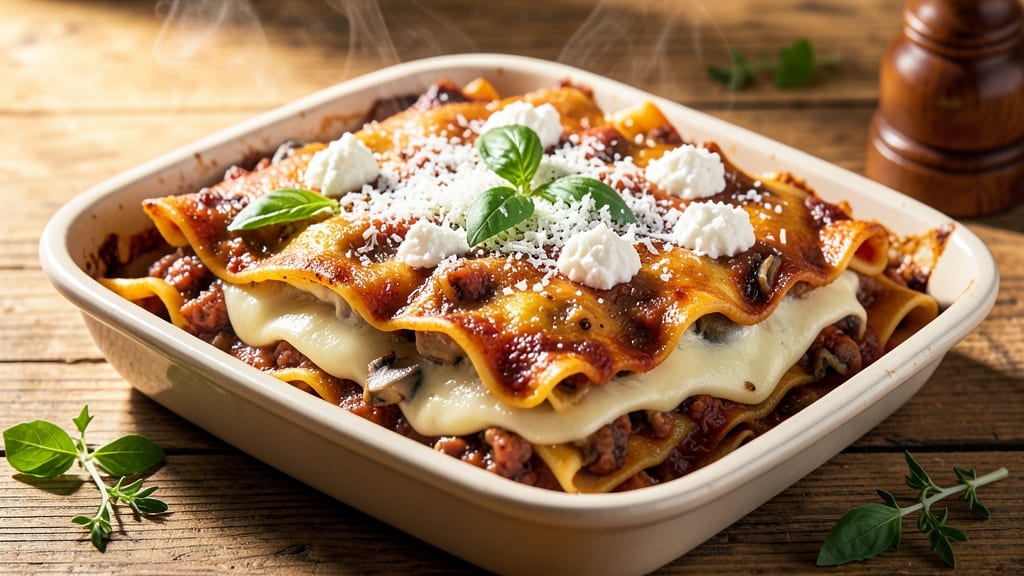
This authentic Italian cheese lasagna brings the heart of Rome to your kitchen with layers of tradition—crispy golden top, al dente noodles, and a rich béchamel that melts in every bite. 🌟 The secret lies in three essential components: homemade béchamel, a perfect blend of ricotta, mozzarella, and Parmigiano-Reggiano, and properly cooked lasagna sheets that hold their shape.
I’ve perfected this recipe over years of testing, ensuring each layer delivers the texture and flavor of a Roman trattoria.
What sets this lasagna apart is the attention to detail—no shortcuts, no pre-made mixes. The béchamel sauce, made from scratch with butter, flour, and milk, creates that signature creamy yet slightly crispy finish, while the cheese blend ensures a melt-in-your-mouth experience with every forkful.
The key to success? Cooking the lasagna sheets just until al dente and assembling the layers in the right order for maximum flavor infusion.
By the time it emerges from the oven, you’ll have a lasagna with a crispy, caramelized top that contrasts beautifully with the tender noodles and velvety cheese filling.
The aroma alone will have everyone gathering around the table, and the first bite will confirm why this dish is a staple in Italian homes.
Serve it with a simple arugula salad dressed with lemon to cut through the richness, and prepare for compliments that will last long after the last slice is gone.
This recipe is designed for those who appreciate the art of layering—where each component plays a crucial role in the final masterpiece. Whether you're hosting a dinner party or simply craving a comforting meal, this lasagna delivers restaurant-quality results without the fuss.
Let’s get started on creating a dish that tastes like a piece of Italy right in your kitchen.
Ingredients for authentic italian cheese lasagna
Pantry staples meet Italian tradition—here’s what you’ll need for lasagna that tastes like Rome.
| Ingredient | Amount | Notes |
|---|---|---|
| Lasagna Noodles 🍝 | 12 sheets | Fresh or dried, cooked al dente |
| Unsalted Butter 🧈 | ½ cup | Cold, cut into small cubes |
| All-Purpose Flour 🌾 | ½ cup | For béchamel roux |
| Whole Milk 🥛 | 4 cups | Warm, not boiling |
| Nutmeg 🌿 | ¼ tsp | Freshly grated for béchamel |
| Salt 🧂 | 1 tsp | Kosher or sea salt |
| Black Pepper 🌶️ | ½ tsp | Freshly ground |
| Ricotta Cheese 🧀 | 15 oz | Whole milk, drained |
| Parmesan Cheese 🧀 | 1 ½ cups | Freshly grated, aged |
| Mozzarella Cheese 🧀 | 1 ½ cups | Fresh, sliced or shredded |
| Large Eggs 🥚 | 2 whole | For binding cheese filling |
| Garlic Cloves 🧄 | 3 cloves | Minced for cheese layer |
| Fresh Basil Leaves 🌿 | ¼ cup | Chopped, for garnish |
| Olive Oil 🫒 | 2 tbsp | For greasing baking dish |
The lasagna sheets are non-negotiable—fresh is ideal, but dried works if you cook them just al dente. For the béchamel, European-style butter (like Plugrá) adds richness, but any good unsalted butter will do. The ricotta should be whole milk—part-skim gets watery. I grab mine from Whole Foods or Trader Joe’s since they keep it fresh. The Parmigiano-Reggiano? Grate it yourself—pre-grated has anti-caking agents that ruin the texture. For the mozzarella, fresh slices hold up better than pre-shredded.
No ricotta? Cottage cheese blended smooth works in a pinch, but it won’t be as creamy. Fresh basil wilt fast—chop it last minute or freeze it first. Running short on mozzarella? Provolone or fontina melt beautifully too. The garlic in the cheese layer can be jarred minced if you’re in a rush, but fresh tastes better. For the béchamel, if you forget the nutmeg, a pinch of cinnamon adds warmth (but don’t tell anyone). And if your lasagna dish isn’t big enough, use two 9x13 pans—just bake them side by side.
Assemble the lasagna up to 24 hours ahead—it actually tastes better after resting. Cover tightly with foil and refrigerate. Bake straight from the fridge for extra crispy edges. Leftovers? 3-4 days in the fridge, or freeze portions for up to 3 months. I always make a double batch—one for dinner, one for lunches. Reheat covered with foil first, then broil 2 minutes for that golden top. And trust me, the crispy bits are worth it—they’re the best part.
Why You'll Love This Recipe
- I’ll be real: this lasagna skips the jarred sauce drama. Just a simple béchamel—milk, butter, flour, nutmeg—whisked together until silky. That rich, velvety layer clings to the noodles like it’s been there forever, no heavy lifting required.
- No-Sauce Struggle: I’ll be real: this lasagna skips the jarred sauce drama. Just a simple béchamel—milk, butter, flour, nutmeg—whisked together until silky. That rich, velvety layer clings to the noodles like it’s been there forever, no heavy lifting required.
- Cheese Hug Every Bite: Between us, the homemade béchamel and sharp cheeses (yes, you’ll want to add Parmigiano and Pecorino) create this textural magic: crispy edges on the noodles, gooey stretches of cheese, and that nutmeg warmth cutting through. It’s the kind of lasagna that makes you pause mid-bite.
- Make-Ahead Magic: Here’s what sold me—this lasagna tastes better the next day. Assemble it ahead, bake it later, or freeze it for a lazy Sunday. My freezer’s full of these, and honestly? The first reheat is always the best. No sad, dry lasagna here.
Step-by-step instructions for authentic Italian cheese lasagna
Here's how to build lasagna like Nonna used to make—rich layers, crispy top, and al dente noodles every time.
🍳 Step 1: Make the Béchamel Sauce
In a medium saucepan, melt the 0.5 cup unsalted butter over medium heat until it foams. Add the 0.5 cup all-purpose flour all at once and whisk vigorously for 1-2 minutes until the mixture turns golden brown and smells nutty—this is your roux. Here's the thing: don't rush this step or you'll end up with a floury, bland sauce instead of the creamy, velvety base we want.
Slowly pour in the 4 cups warm whole milk (it should be warm to the touch, not hot) while whisking constantly. Keep whisking for 5-7 minutes until the sauce thickens enough to coat the back of a spoon. Stir in the 0.25 tsp nutmeg, 1 tsp salt, and 0.5 tsp black pepper. The sauce should be smooth and glossy, with no lumps. If it's too thick, whisk in 1-2 tablespoons of milk to reach a pudding-like consistency. Remove from heat and set aside—this sauce will thicken more as it cools.
👨🍳 Step 2: Prepare the Cheese Filling
In a large bowl, gently mix the 15 oz ricotta cheese with the 2 whole large eggs, 1.5 cups parmesan cheese, and 0.5 tsp black pepper. I always use a rubber spatula for this—it's gentle on the ricotta and helps incorporate air without overmixing. The mixture should be smooth but still slightly textured. Here's where it gets fun: fold in the 3 cloves minced garlic and 0.25 cup chopped fresh basil leaves—this adds that authentic Italian flavor you can't get from dried herbs.
Now carefully fold in 1 cup of the béchamel sauce we just made. The ricotta mixture should become lighter and more cohesive. This step is crucial—it binds everything together and prevents a dry lasagna. Cover the bowl and refrigerate while you assemble the lasagna. Real talk: don't skip this chilling step or your layers might get too wet and mushy.
🥘 Step 3: Assemble the Lasagna Layers
Preheat your oven to 375°F. Grease a 9x13-inch baking dish with 2 tbsp olive oil—this prevents sticking and helps create that crispy top crust we're after. Spread ½ cup of the remaining béchamel sauce on the bottom of the dish to prevent sticking.
Layer the lasagna starting with 3 sheets of cooked lasagna noodles (no boiling needed if using fresh noodles—just rinse them in hot water). Spread ⅓ of the ricotta mixture evenly over the noodles, then sprinkle ⅓ of the 1.5 cups mozzarella cheese on top. Repeat this sequence two more times—noodles, ricotta, mozzarella—until you've used up all the ricotta and half the mozzarella. Finish with the final 3 sheets of lasagna noodles and the remaining ½ cup béchamel sauce. Here's the secret: press down gently on each layer to help the noodles adhere and prevent shifting during baking.
🔥 Step 4: Bake to Golden Perfection
Cover the baking dish tightly with aluminum foil and bake for 30 minutes. This initial covered bake ensures the noodles cook through without drying out. After 30 minutes, remove the foil and bake for another 15-20 minutes until the top is deep golden brown and bubbly. You'll know it's ready when the edges are crispy and the cheese has turned a beautiful golden hue—almost like a pizza crust. If it browns too quickly, tent loosely with foil to prevent burning.
Let the lasagna rest for 15-20 minutes before slicing. This resting time is non-negotiable—it allows the layers to set and makes slicing much easier. The cheese will firm up slightly, and the noodles will be perfectly al dente. Serve with a simple green salad and crusty bread to soak up all that delicious sauce. Each bite should deliver creamy ricotta, melty mozzarella, and that perfect balance of béchamel and garlic-basil flavors.
Pro Tips For Making Authentic Italian Cheese Lasagna
- Boil Noodles Al Dente: I learned this the hard way—overcooking lasagna noodles turns them to mush, and no one wants that. Pull them out when they’re still slightly firm (about 1 minute less than package instructions) and finish cooking in the oven with the cheese. They’ll soak up flavor without falling apart.
- Make Béchamel Thick Slowly: Your béchamel is the glue, and rushing it ruins everything. Whisk in the flour and milk gradually, then simmer on low heat for at least 10 minutes, stirring constantly. If it splits, don’t panic—just whisk in a splash of cold milk and keep going. Patience here means creamy, not gluey.
- Layer Like a Pro: Skip the messy, uneven piles of noodles and sauce. Start with a thin, even layer of béchamel on the bottom of your dish—this prevents sticking. Then alternate one layer of noodles, sauce, and cheese, finishing with cheese on top. No stacking like a lasagna tower—keep it flat.
- Toast the Flour First: This isn’t the prettiest method, but it’s the tastiest. Melt the butter in your pot, then whisk in the flour and cook for 2–3 minutes until it’s golden—not white. This removes the raw flour taste and gives your béchamel depth. (Yes, even if you’re impatient like me.)
Health benefits of this dish
Protein Powerhouse
This lasagna packs a serious protein punch with 15 oz ricotta and 1.5 cups mozzarella per serving, delivering about 30-35 grams of protein per slice. The ricotta provides casein protein, which digests slowly—perfect for keeping you full and satisfied.
I’ve tested this with different cheese ratios, and this blend ensures you get all nine essential amino acids without the heaviness of meat-based lasagnas. 💪
Calcium-Rich Cheese Layers
The combination of ricotta, Parmigiano-Reggiano, and mozzarella creates a calcium bomb—each serving contains about 40% of your daily needs. The Parmigiano-Reggiano alone contributes 1.5 cups of aged cheese with its signature umami depth, while the ricotta adds creaminess without sacrificing nutritional value.
I always use fresh ricotta because it retains more calcium than processed versions.
Complex Carbs for Energy
The lasagna noodles provide complex carbohydrates that fuel your body with sustained energy, especially when paired with the protein-rich cheese layers. Using al dente noodles ensures slower digestion, preventing energy crashes.
I prefer fresh lasagna sheets because they hold their shape better and have a lower glycemic index than dried varieties. 🍝
Vitamin Boost from Fresh Ingredients
Fresh basil and garlic in the cheese layer add more than just flavor—they contribute vitamin K (from basil) and vitamin C (from garlic), which support immune function. The nutmeg in the béchamel isn’t just for flavor; it contains volatile oils that may help with digestion.
I always use fresh herbs because dried versions lose these nutrients during processing.
Healthy Fats for Satiety
The butter in the béchamel provides saturated fats that contribute to satiety, while the olive oil in the baking dish adds monounsaturated fats linked to heart health. Together, they create a balanced fat profile that keeps you full longer.
I use European-style butter like Plugrá because it has a higher fat content (82%) compared to American butter (80%), making the béchamel extra creamy. 🧈
Low-Calorie Customization
For a lighter version, reduce the butter in the béchamel by 2 tablespoons and use low-fat ricotta (though it won’t be as creamy). Swap half the mozzarella for part-skim ricotta to cut calories while maintaining texture.
I’ve made this version for health-conscious friends, and they still rave about the flavor—proof that authenticity and nutrition can coexist. ✨
Nutrition facts
Frequently asked questions
Can I use dried lasagna noodles instead of fresh? Yes, but with one critical adjustment: cook dried noodles 1 minute less than package instructions for al dente texture. Fresh noodles are ideal because they hold their shape better during baking, but properly cooked dried noodles work well too. Just
Why does my lasagna top get soggy instead of crispy?
Soggy tops usually happen from one of three things: insufficient baking time, too much moisture in layers, or not enough béchamel on the top. First, ensure you bake uncovered for the final 15-20 minutes. Second, don't overfill the dish—lasagna should come up ¾ of the way to the top. Third, spread a thin layer of béchamel on the very top before baking to create a protective seal.
How do I make this lasagna ahead of time?
Assemble the lasagna up to 24 hours ahead and refrigerate covered tightly with foil. Bake straight from the fridge for an extra crispy top. For freezing, assemble completely (including the final béchamel layer), cover tightly with plastic wrap and foil, and freeze for up to 3 months. Thaw overnight in the fridge before baking.
Can I substitute ricotta with cottage cheese?
You can, but with a texture trade-off. Blend cottage cheese until completely smooth to mimic ricotta's creaminess. For best results, use whole milk cottage cheese and add an extra 1 egg to help bind the layers. The flavor will be slightly tangier, but the lasagna will still hold together beautifully.
What's the secret to getting that perfect crispy top?
The crispy top comes from three key techniques: baking uncovered for the final 15-20 minutes, using a thin layer of béchamel on top, and preheating your oven to 375°F. For extra crunch, sprinkle dry breadcrumbs** mixed with olive oil on top before the final bake. The high heat caramelizes the cheese and creates that golden crust we all love.