
Sauces & Condiments
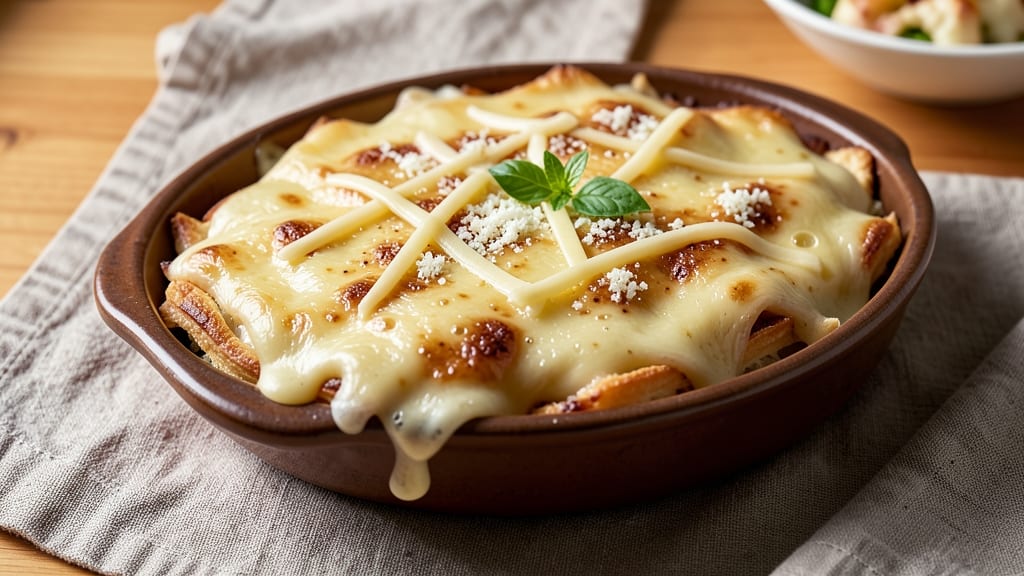
This au gratin cheese sauce recipe transforms ordinary dishes into something extraordinary with its golden crust and silky, velvety interior. The secret lies in a perfectly balanced roux that creates a sauce so rich it clings beautifully to potatoes, pasta, or meats while developing that signature crispy top.
I developed this version after years of testing—no lumps, no separation, just restaurant-quality results every time.
The foundation begins with equal parts butter and flour cooked until nutty brown, which forms the backbone of our sauce. We then slowly incorporate warm cream and heavy cream to maintain smoothness, while sharp cheddar and Gruyère add depth and melt into a luxurious texture.
The key technique? Keeping the sauce at a gentle simmer until thickened just enough to coat the back of a spoon.
What makes this sauce truly special is its versatility—it works as a topping for baked potatoes, a creamy layer in lasagna, or even a dipping sauce for bread. The cheese melts into silky streaks while the top develops a crispy, golden crust that's impossible to resist.
This is the kind of sauce that elevates simple ingredients into something truly memorable.
For extra flavor, consider adding a pinch of mustard powder or fresh herbs like thyme, but the classic version remains foolproof. Once you try this, you'll never go back to store-bought cheese sauces again. Let's get started on creating this luxurious, crowd-pleasing sauce that's perfect for any dish.
Ingredients for au gratin cheese sauce
Nine ingredients create this luxurious sauce with golden crust and velvety texture.
| Ingredient | Amount | Notes |
|---|---|---|
| Unsalted Butter 🧈 | ½ cup | Cold, cubed for even cooking |
| All-Purpose Flour 🌾 | ½ cup | Sifted for smooth sauce |
| Heavy Cream 🥛 | 1 ½ cups | Full-fat for richness |
| Whole Milk 🥛 | ½ cup | Warmed to blend smoothly |
| Sharp White Cheddar Cheese 🧀 | 1 ½ cups | Freshly grated, block preferred |
| Gruyère Cheese 🧀 | 1 cup | Freshly grated, nutty flavor |
| Mustard Powder 🌶️ | ½ tsp | For subtle depth of flavor |
| Fresh Thyme Leaves 🌿 | ¼ tsp | Or 1/4 tsp dried thyme |
| Salt 🧂 | 1 tsp | Diamond Crystal preferred |
| Black Pepper 🌶️ | ½ tsp | Freshly ground for warmth |
The butter and flour form the sauce's backbone—cook them until nutty brown for that signature golden crust. European-style butter has higher fat content, perfect for this recipe. I always grab Plugrá from specialty stores or Land O'Lakes for reliable quality. The Gruyère is non-negotiable for that authentic au gratin flavor—Whittard of Chelsea or Murray's Cheese are my go-to brands. Freshly grated cheese melts better than pre-shredded, which has anti-caking agents that prevent proper texture.
No heavy cream? Half-and-half with extra butter works in a pinch, though the sauce won't be quite as rich. Substituting Gruyère with Comté or Emmental keeps the nutty depth. The mustard powder adds subtle complexity—skip it if you prefer a cleaner flavor. For thyme, fresh is ideal but dried works at one-third the amount. If your flour is old, toast it lightly in the pan first to remove any stale flavor. The cheddar should be sharp—Cabot or Tillamook are excellent choices that won't overpower the Gruyère.
This sauce reheats beautifully—simmer gently until hot, stirring occasionally to prevent scorching. Keeps 5 days refrigerated in an airtight container. For freezing, cool completely first, then portion into ice cube trays before transferring to a bag. Thaw overnight in the fridge. The sauce thickens as it cools, so you may need to add a splash of milk when reheating. I always make extra—it disappears fast when served over baked potatoes or lasagna.
Why You'll Love This Recipe
- Five-Ingredient Magic: I swear by this—just butter, flour, cream, milk, and that sharp cheddar. No fancy gadgets, no overcomplicated steps. Honestly, it’s the kind of sauce where you can measure everything in one hand while stirring with the other.
- Crispy-Creamy Obsession: That golden crust on top? Pure bliss. The roux at the bottom thickens into a velvety base, while the melted cheddar adds a salty, tangy punch. Between us, it’s the kind of flavor that makes you pause mid-bite.
- Weeknight to Dinner Party: Slather it on potatoes, toss it with pasta, or drizzle it over roasted veggies—it works everywhere. I’ve used it for lazy Tuesday dinners and even as a showstopper for guests. (Yes, even on a Tuesday night.)
- Leftovers That Don’t Suck: Make a double batch and reheat it later—no dryness, no weird textures. The sauce actually improves the next day, especially if you sneak in a splash of milk to loosen it up. My freezer’s full of it, and I’m not ashamed.
Step-by-step instructions for au gratin cheese sauce
This velvety sauce delivers that perfect golden crust and creamy interior every time.
Create the Roux for a Smooth Foundation
Melt the 0.5 cup unsalted butter in a medium saucepan over medium heat. I like to use cubed butter so it melts evenly without burning. Once fully melted, reduce heat to medium-low and whisk in the 0.5 cup all-purpose flour all at once. This creates a roux, which will thicken our sauce beautifully.
Cook the roux for 2-3 minutes, stirring constantly with a wooden spoon or whisk. You're looking for it to turn a light golden color—this indicates the raw flour flavor has cooked off. If it darkens too quickly, reduce the heat immediately. This step is crucial as it forms the backbone of our sauce.
Gradually Add Liquids for a Silky Texture
Slowly pour in the 1.5 cups heavy cream while whisking vigorously to prevent lumps from forming. I add it in a steady stream, not all at once, which helps create an ultra-smooth sauce. After the cream is fully incorporated, whisk in the 0.5 cup warmed whole milk. The sauce should begin to thicken noticeably as it simmers.
Keep the heat at medium-low and continue cooking for 5-7 minutes, stirring frequently. You'll see the sauce transform from thin to thickened—it should coat the back of a spoon but still flow easily. This is where the magic happens, as the starch in the flour fully activates to create that signature au gratin consistency.
Build Flavor with Cheese and Aromatics
Reduce heat to low and begin adding the cheeses. First, stir in the 1.5 cups sharp white cheddar cheese a handful at a time, allowing each addition to melt completely before adding more. Then whisk in the 1 cup gruyère cheese, which adds that nutty depth that makes this sauce truly special. The mixture will look curdled at first—that's normal.
Next, add the 0.5 tsp mustard powder, 0.25 tsp fresh thyme leaves, 1 tsp salt, and 0.5 tsp black pepper. Stir constantly for 3-5 minutes until the sauce becomes completely smooth and glossy. This is where all the flavors meld together—take your time here. The sauce should be thick enough to coat the back of a spoon but still pour easily.
Finish with Perfect Timing for That Golden Crust
Remove the saucepan from heat and transfer the sauce to a heatproof bowl. Here's the secret to that perfect golden crust: cover the bowl tightly with plastic wrap and press it directly onto the surface of the sauce. This prevents a skin from forming while keeping the sauce hot. Let it rest for 10-15 minutes before using.
When you're ready to use it, give the sauce one final stir. It should be smooth, velvety, and ready to generously coat your potatoes or other au gratin dishes. The sauce will thicken slightly more as it cools, so don't worry if it looks a bit loose when you first make it. This resting period ensures the best possible texture and flavor when you serve it.
Pro Tips For Making Au Gratin Cheese Sauce
- WHISK THE CHEESE FIRST: I learned this the hard way—adding shredded cheddar straight to the roux makes clumps that never dissolve. Instead, toss the cheese in a bowl with 2 tablespoons of the milk and whisk it into a smooth paste before combining with the warm sauce. The heat will melt it perfectly without lumps.
- STOP AT SMALL BUBBLES: The sauce is ready when it thickens to a glossy, creamy consistency—think tiny, slow bubbles that coat the back of a spoon, not a full boil. Overcooking turns it grainy, and undercooking leaves it thin. Keep the heat at a gentle simmer, and stir often.
- GRATE THE CHEESE FINE: Pre-shredded cheese is coated in anti-caking agents that make it behave like sand in your sauce. Use a box grater or food processor for sharp white cheddar, and pulse it just until it’s fine but not paste—this ensures it melts smoothly and delivers real flavor, not filler.
- SALT THE MILK: The heavy cream and milk in this recipe are often unsalted, so the sauce can end up bland if you wait until the end to season. Mix ½ teaspoon of salt directly into the milk before adding it to the roux—it dissolves evenly and cuts through the richness better than adding it later.
Storing and reheating your au gratin cheese sauce
Refrigerator Storage
Store your au gratin cheese sauce in an airtight container with a lid pressed tightly to minimize air exposure. I use glass Pyrex containers because they distribute heat evenly when reheating.
Keep it refrigerated at 40°F or below for up to 5 days—the flavors actually deepen as the cheese melds further. The sauce thickens slightly when cold, so give it a quick stir before reheating. 🥫
Freezer Storage
For longer storage, let the sauce cool completely before transferring to freezer-safe silicone molds or quart-sized freezer bags. Leave ½-inch headspace to prevent expansion cracks. Portion into ice cube trays for single-serving portions—just pop them into dishes straight from the freezer!
This sauce freezes beautifully for up to 3 months without texture loss. Thaw overnight in the fridge before reheating. ❄️
Stovetop Reheating
My preferred method is gentle stovetop reheating to maintain that creamy texture. Pour the sauce into a heavy-bottomed saucepan and warm over low heat for 5-7 minutes, stirring frequently with a silicone spatula.
Add 1-2 tablespoons of warm milk if it thickens too much during reheating. The sauce should reach 165°F for safety—use a thermometer to check. 🔥
Microwave Reheating
For quick reheating, transfer sauce to a microwave-safe bowl and cover loosely with a paper towel. Heat in 30-second intervals on 50% power, stirring well between each interval. This prevents hot spots that can cause separation.
The sauce should be steaming but not bubbling—overheating causes the cheese to separate. Stir in a splash of warm milk if needed to restore creaminess. ⏱️
Baking for Extra Crisp
For that signature golden crust when serving, transfer reheated sauce to a small baking dish and broil for 2-3 minutes on high. Watch closely—broilers vary! The top should turn deep golden brown while the interior remains creamy. This works perfectly for topping baked potatoes or casseroles. 🌟
Reheating Tips
Always reheat sauce gently—never boil—to prevent cheese from breaking or the sauce from becoming grainy. If the sauce separates, whisk in 1 tablespoon of cold butter to re-emulsify. For extra richness, add a pinch of nutmeg or white pepper during reheating.
I keep a small jar of this sauce in my fridge at all times—it disappears faster than you'd think! 💫
Nutrition facts
Frequently asked questions
Why does my cheese sauce get grainy when I add cheese?
Graininess happens when cheese melts too quickly or the sauce isn't hot enough. Always add cheese off the heat or at low heat, stirring constantly until fully melted. For extra smoothness, whisk in 1 tablespoon of cold butter at the end to re-emulsify. The sauce should be at 170°F before adding cheese to ensure proper melting.
Can I make this sauce without heavy cream?
Yes! Replace the 1.5 cups heavy cream with 1 cup heavy cream + ½ cup whole milk for a slightly lighter version. For extra richness, use ½ cup half-and-half + 1 extra tablespoon butter. The texture will be slightly thinner, but still delicious. The key is to reduce the sauce longer until it reaches the desired consistency.
What's the best cheese substitute for Gruyère?
For that nutty depth, try Comté or Emmental in equal amounts. If you prefer sharper flavors, Parmigiano-Reggiano works well but use only ½ cup as it's stronger. Avoid pre-shredded cheese—it contains anti-caking agents that prevent smooth melting. Freshly grate your own for the best results.
How do I prevent a skin from forming on the sauce?
Transfer the sauce to a heatproof bowl and press plastic wrap directly onto the surface. This creates an airtight seal that traps heat and prevents skin formation. For extra insurance, place a damp paper towel over the plastic wrap. The sauce will stay hot and smooth for up to 1 hour this way.
Can I use this sauce for dishes other than potatoes?
This versatile sauce works beautifully on baked pasta, meatloaf, stuffed peppers, or even as a dip for bread. For extra flavor, add 1 teaspoon Dijon mustard or ½ teaspoon smoked paprika when reheating. The creamy texture and golden crust make it perfect for any dish that needs a rich topping.