
Appetizers
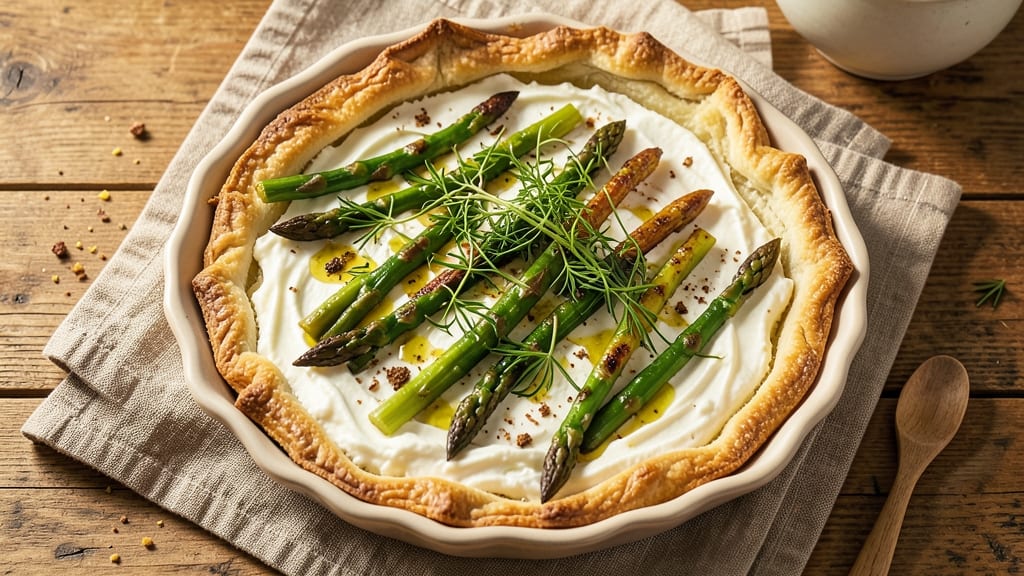
This asparagus goat cheese and tarragon tart delivers the perfect balance of crispy pastry and herby filling that feels impossibly elegant yet simple to assemble. The secret lies in a perfectly blind-baked crust that stays golden and flaky while supporting the rich, creamy goat cheese center.
I've been perfecting this recipe for spring entertaining, where it always disappears first—proof that even the most delicate flavors can create a showstopping centerpiece.
The filling transforms ordinary ingredients into something extraordinary: tender asparagus spears, velvety goat cheese, and fresh tarragon create layers of flavor that dance between earthy and bright.
What makes this recipe work is the technique—sautéing the asparagus just until tender-crisp, then layering it with herbed goat cheese that melts into a luxurious blanket during baking. The result is a tart with a crispy, buttery crust that contrasts beautifully with the soft, herby filling.
By the time it emerges from the oven, you'll have a tart with a golden, shatteringly crisp crust and a filling that's perfectly set—neither too runny nor too firm.
The aroma of fresh tarragon and caramelizing asparagus will fill your kitchen, while the visual contrast of crispy edges and creamy center makes it impossible to resist. This is the kind of dish that transforms a simple appetizer into an unforgettable culinary experience.
Whether you're serving it at a spring brunch or bringing it to a dinner party, this tart delivers restaurant-quality results with minimal effort. The best part?
You can prepare the crust ahead and assemble everything just before baking—making it perfect for stress-free entertaining. Let's get started on creating this showstopping dish.
Ingredients for asparagus goat cheese and tarragon tart
Crispy crust meets herby goat cheese bliss—these ingredients transform simple pantry staples into showstopping spring tart perfection.
| Ingredient | Amount | Notes |
|---|---|---|
| All-Purpose Flour 🌾 | 2 ½ cups | High-protein for extra crispiness |
| Unsalted Butter 🧈 | 1 cup | Cold, cubed for flaky crust |
| Ice Water 💧 | ½ cup | For dough elasticity |
| Diamond Crystal Kosher Salt 🧂 | 1 tsp | Fine grain preferred |
| Fresh Asparagus 🌱 | 1 lb | Medium spears, trimmed |
| Extra-Virgin Olive Oil 🫒 | 2 tbsp | Light fruity variety |
| Goat Cheese 🧀 | 8 oz | Creamy, log-style preferred |
| Fresh Tarragon 🌿 | ¼ cup | Chopped finely, stems removed |
| Heavy Cream 🥛 | ¼ cup | Full-fat for richness |
| Fresh Chives 🌱 | 2 tbsp | Minced for garnish |
| Black Pepper 🌶️ | ¼ tsp | Freshly cracked |
| Fresh Lemon Zest 🍋 | 1 tsp | Brightens the filling |
The crust is where magic happens. King Arthur flour or Bread Sacker's high-protein flour creates that signature shatteringly crisp edge—worth hunting down if your local store doesn't carry it. Butter must be cold and cubed (no melting!) for maximum flakiness. I always use Whole Foods' organic European-style butter when possible, but any good unsalted brand works. For the asparagus, look for bright green spears with tightly closed tips—those at Trader Joe's or farmers markets are ideal. Trim the woody ends precisely, leaving the tender parts intact for perfect texture. Tarragon is non-negotiable here—fresh from the market has that anise-like brightness that dried can't replicate.
No goat cheese? Cream cheese mixed with lemon juice gets you close, though it lacks the tang. Short on tarragon? Fresh dill at half the amount adds a similar herbal note. The heavy cream can be swapped for half-and-half, though the filling won't be quite as rich. For the crust, if you're short on butter, avocado oil or coconut oil work in a pinch (just chill the dough longer). The lemon zest is crucial—organic Meyer lemons from Costco give the best flavor. And if you can't find fresh tarragon, dried French tarragon at one-quarter the amount is the next best thing, though it's still not perfect. The chives are just for garnish, so don't stress if you skip them—it's not the end of the world.
This tart shines when made ahead. Pre-bake the crust up to 2 days ahead and store it wrapped at room temperature—it crisps up beautifully when reheated. The filling can be assembled 12 hours ahead and refrigerated, then baked straight from the fridge (add 5-10 minutes to baking time). For serving, I like to reheat slices at 350°F for 5-8 minutes to restore that perfect contrast between crisp crust and creamy filling. Leftovers? 3 days max in the fridge—the crust loses its crispness after that. Freezing isn't recommended—this tart is best enjoyed fresh from the oven.
Why You'll Love This Recipe
- No-Fuss Crust: I swear by this cold butter dough—just flour, butter, ice water, and a pinch of salt. You can mix it in 5 minutes while the asparagus roasts, and honestly? It’s the kind of crust that holds up without needing a fancy rolling pin or perfect edges.
- Tarragon Magic: That bright, anise-like tarragon transforms the goat cheese from "meh" to "I’d drive 20 minutes for this." Pair it with the crisp asparagus, and you’ve got a flavor combo that feels fancy but isn’t trying too hard.
- Weeknight Hero: This tart is my go-to for busy nights—roast the asparagus while you mix the dough, assemble, and bake. Leftovers? They reheat beautifully for lunch the next day, or you can even serve them cold with a salad. (Yes, even on a Tuesday night.)
- Budget Bright Spot: Fresh asparagus might seem pricey, but a single bunch stretches far when roasted and chopped. The rest of the ingredients? Pantry staples. This is the kind of recipe that makes you feel like you’re eating well without breaking the bank.
Step-by-step instructions for asparagus goat cheese tart
Here's how to create a golden, shatteringly crisp tart with herby goat cheese filling—every bite delivers perfect texture contrast.
Prepare the Tart Dough for Maximum Crispiness
In a large mixing bowl, combine the 2.5 cups all-purpose flour and 1 tsp diamond crystal kosher salt. Cut in the 1 cup unsalted butter (still cold) using a pastry cutter or your fingers until the mixture resembles coarse crumbs with pea-sized butter pieces remaining. This cold butter creates the flaky layers we're after.
Gradually add the 0.5 cup ice water, 1 tablespoon at a time, mixing gently with a fork until the dough just comes together. It should be cool to the touch and slightly tacky but not sticky. Turn it out onto a lightly floured surface and knead just until smooth—about 10-12 strokes. Wrap tightly in plastic and refrigerate for at least 1 hour (or up to 24 hours). The longer it rests, the more flavor develops.
Roll and Blind-Bake the Crust
Preheat your oven to 375°F. On a lightly floured surface, roll the chilled dough into a 12-inch circle about 1/8-inch thick. Transfer to a 12-inch tart pan with a removable bottom, pressing gently to adapt it to the shape. Trim the excess dough, leaving a 1/2-inch overhang. Prick the base all over with a fork to prevent puffing.
Line the crust with parchment paper, then fill it completely with pie weights or dried beans. Bake for 15 minutes, then remove the weights and bake for another 10 minutes until the edges are golden brown and the base is completely set. The crust should be firm enough to support the filling without bending. Let it cool completely on a wire rack before filling.
Prepare the Herby Goat Cheese Filling
In a medium bowl, combine the 8 oz goat cheese, 0.25 cup heavy cream, 0.25 cup finely chopped fresh tarragon, 1 tsp fresh lemon zest, and 0.25 tsp black pepper. Mix gently until just combined—don't overwork it or the cheese will get stringy. The mixture should be smooth with visible herb flecks. Cover and refrigerate while you prepare the asparagus.
Trim the tough ends from the 1 lb fresh asparagus and cut each spear into 1-inch pieces. Heat 2 tbsp extra-virgin olive oil in a large skillet over medium-high heat. Add the asparagus and cook for 4-5 minutes until tender-crisp with just a hint of char. Season with a pinch of salt and set aside.
Assemble and Bake the Tart
Spread the goat cheese mixture evenly over the cooled tart crust, leaving a 1/2-inch border. Arrange the cooked asparagus pieces in a single layer over the filling, pressing down gently to help them adhere. Sprinkle the remaining tarragon and lemon zest over the top for extra brightness.
Bake at 375°F for 20-25 minutes until the filling is set and the edges are deep golden brown. The center should be just firm to the touch—it will continue setting as it cools. Let the tart rest for 10 minutes before slicing to allow the filling to set properly.
Garnish and Serve with Confidence
Remove the tart from the oven and immediately sprinkle with 2 tbsp minced fresh chives. Let it cool for 5 minutes before slicing into wedges. The crust should be shatteringly crisp, the goat cheese filling creamy yet slightly firm, and each bite should deliver that perfect herby brightness.
Serve warm with a simple arugula salad or crusty bread to soak up any remaining filling. The contrast of crisp crust, tender asparagus, and rich goat cheese makes this tart unforgettable—every element works together in perfect harmony.
Pro Tips For Making Asparagus Goat Cheese And Tarragon Tart
- CHILL THE DOUGH: I learned this the hard way—rolling out cold puff pastry is a nightmare. Wrap the dough in plastic and refrigerate for at least 20 minutes before shaping your tart shell. The butter stays firm, the layers stay intact, and you won’t end up with a sad, greasy mess in your hands.
- TRIM ASPARAGUS STRAIGHT: Skip the scissors. Use a sharp chef’s knife to cut asparagus spears at a 45-degree angle—this makes them look intentional and cook evenly. And for the love of brunch, don’t overcrowd the pan when roasting; give those spears space or they’ll steam instead of caramelize.
- SALT THE GOAT CHEESE: This isn’t just about flavor—it’s about balance. Goat cheese is tangy, so sprinkle a pinch of kosher salt (about ¼ teaspoon per 4 oz) directly into the softened cheese before mixing with tarragon. It mellows the sharpness and makes the whole filling sing.
- PRE-BAKE THE CRUST: Don’t skip the 15-minute blind bake at 375°F—yes, even if you’re eager to fill it. A pre-baked shell prevents a soggy bottom when the asparagus and goat cheese steam up. Line the crust with parchment, fill with pie weights or dried beans, and bake until it’s just starting to golden. Trust me, your future self will notice.
Essential equipment for this recipe
Crust Perfection Tools
Your tart starts with a flaky, golden crust, so invest in a 12-inch tart pan with removable bottom—I swear by Nordic Ware Natural Aluminum for even baking.
A rolling pin with a smooth surface (like OXO Good Grips) prevents dough from sticking, while a pastry brush (preferably silicon-bristled) helps paint egg wash for that glossy finish. Don’t skip the pie weights—I use ceramic ones from Le Creuset to avoid warping. 🌟
Filling Prep Essentials
For the goat cheese filling, a sharp chef’s knife (I love Mercer Culinary) and microplane (for lemon zest) are non-negotiable. A fine-mesh strainer helps remove tarragon stems cleanly, and a small mixing bowl (like Pyrex) keeps the filling contained.
A skillet with sloped sides (I use All-Clad Stainless) ensures even asparagus cooking without sticking. 🔥
Baking Precision
An oven thermometer (I recommend Thermoworks Oven Thermometer) guarantees your 375°F setting is accurate—no more under- or overbaked crusts! A wire rack (like Ozeri Touchstone) cools the tart evenly, preventing sogginess.
For blind-baking, parchment paper (from Reynolds) protects the crust, and dried beans (or pie weights) prevent puffing. Pro tip: Use a digital kitchen scale (like OXO Good Grips) for precise dough measurements. ⚡
Serving with Style
Slice the tart cleanly with a sharp serrated knife (I use Victorinox Fibrox)—it glides through the crust without crushing. A slate serving board (like West Elm’s) elevates presentation, while a small bowl of extra chives adds a fresh garnish.
For serving, a tart lifter (or spatula) helps transfer slices without breaking the crust. Don’t forget a cheese knife for easy goat cheese scooping if you’re making adjustments! ✨
Nutrition facts
Frequently asked questions
Can I substitute goat cheese with another cheese?
Yes, but the texture and flavor will change. For a similar creamy result, use 8 oz cream cheese mixed with 1 tbsp lemon juice to mimic goat cheese's tang. If you prefer a sharper taste, try feta cheese (drained well) or ricotta mixed with 1 tbsp heavy cream for richness. Avoid pre-shredded cheeses—they contain anti-caking agents that make the filling grainy.
How do I prevent the crust from getting soggy?
Prevent soggy crust by following these key steps:
- Blind-bake the crust completely until it's golden and firm (no spots left white).
- Let the cooled crust sit at room temperature for 10 minutes before adding filling to prevent condensation.
- Use a thin layer of goat cheese (about 1/4-inch thick) so the filling sets properly.
- Bake the tart on the middle rack for even heat distribution. The 10-minute rest after baking is critical for the filling to firm up!
What's the best way to reheat leftover tart?
Reheat slices in a 350°F oven for 5-8 minutes to restore that perfect contrast between crisp crust and creamy filling. For a quick fix, use the air fryer at 325°F for 3-4 minutes—it crisps the edges beautifully. Avoid microwaving as it makes the crust rubbery. Store leftovers in an airtight container for up to 3 days, but enjoy them fresh for best texture!
Can I make this tart ahead of time?
The crust can be blind-baked and stored at room temperature for up to 2 days in an airtight container. Assemble the filling 12 hours ahead and refrigerate—it actually develops deeper flavor. Bake straight from the fridge (add 5-10 minutes to baking time). For a make-ahead brunch, prepare everything the night before and bake in the morning. The tart keeps well for 3 days refrigerated, but freezing isn't recommended as it affects the crust's crispness.
What if I don't have fresh tarragon?
Fresh tarragon is ideal, but you can substitute with fresh dill (use half the amount) or dried tarragon (one-quarter the amount). For a different herbal note, try fresh thyme or basil at the same quantity. Avoid using dried herbs like oregano or marjoram—they have very different flavor profiles. The key is balancing the earthy asparagus with bright, fresh herbs. If you're missing tarragon completely, the dish will still taste good but lose its signature anise-like brightness.