
Sauces & Condiments
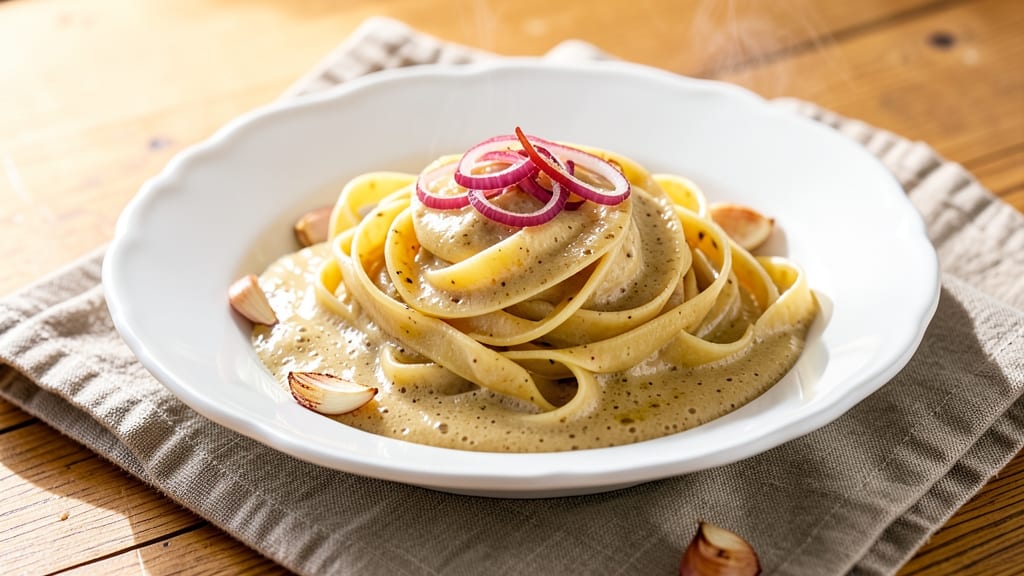
This Asiago cheese pasta sauce transforms ordinary noodles into a creamy, nutty masterpiece that clings perfectly to every strand. 💛 I first perfected this technique while working in Charleston, where I learned how to balance rich cheese with just the right amount of liquid for that signature velvety texture.
The key lies in emulsifying the sauce properly—no lumps, no separation—just a golden, silky melt that coats pasta like a dream.
What makes this recipe special is its approachability. You don’t need fancy equipment or advanced skills—just a few simple ingredients and a method that ensures foolproof results every time.
The Asiago cheese provides that distinctive nutty flavor that sets this sauce apart from basic cheddar or parmesan blends, while a touch of cream and butter creates the perfect balance of richness and smoothness.
By the time you twirl that first forkful, you’ll taste perfectly cooked pasta enveloped in a sauce that’s creamy yet not heavy, nutty yet not overpowering. The sauce clings to each noodle, creating bites that are rich, satisfying, and impossible to resist.
This is the kind of dish that elevates a weeknight dinner into something special—simple enough for a weeknight but impressive enough for guests.
Pair it with garlic bread for soaking up every last drop or serve alongside a fresh salad to balance the richness. The best part? It’s ready in under 30 minutes, making it the perfect solution for those busy evenings when you still want to enjoy a homemade meal.
Let’s get cooking!
Ingredients for asiago cheese sauce recipe pasta
Golden, nutty melt that clings to every noodle—just 12 simple ingredients transform dinner night.
| Ingredient | Amount | Notes |
|---|---|---|
| Asiago Cheese 🧀 | 1 ½ cups | Freshly grated block preferred |
| Heavy Cream 🥛 | 1 cup | Full-fat for best texture |
| Unsalted Butter 🧈 | 4 tbsp | Cold for emulsification |
| Pasta 🍝 | 12 oz | Fettuccine or penne preferred |
| Shallot 🧅 | 1 whole | Finely minced |
| Garlic Cloves 🧄 | 3 cloves | Minced for depth |
| Whole Milk 🥛 | ½ cup | For smooth consistency |
| Parmesan Cheese 🧀 | ½ cup | Freshly grated |
| Olive Oil 🫒 | 2 tbsp | Extra-virgin for richness |
| Salt 🧂 | ½ tsp | Diamond Crystal preferred |
| Black Pepper 🌶️ | ¼ tsp | Freshly ground |
| Nutmeg 🌿 | ⅛ tsp | Freshly grated |
The Asiago is non-negotiable here—block form, freshly grated is a game-changer. Whole Foods or specialty cheese shops carry the best, but any store's Asiago will work if it's labeled 'aged' (that's the nutty flavor we're after). Heavy cream is key for that velvety texture, so don't skimp on the full-fat version. I always grab the Trader Joe's brand—it's affordable and creamy. The butter should be cold when you add it; this helps emulsify the sauce properly so it doesn't separate. Pro tip: cut it into small cubes before adding to the pan for even melting.
No Asiago? Parmigiano-Reggiano plus a pinch of walnuts gets you close—walnuts add that nutty depth. Short on heavy cream? Half-and-half plus a splash of milk works, but the sauce will be slightly lighter. Fresh shallots are ideal, but 1 tbsp minced onion is a perfect swap. The nutmeg is optional but adds that signature warmth—if you skip it, add an extra pinch of black pepper. For the pasta, fettuccine or penne are ideal—their ridges catch the sauce beautifully. And trust me on the Parmesan: freshly grated from a block makes all the difference over pre-grated.
This sauce reheats beautifully—just add a splash of milk or water to loosen it up. Keeps for 3-4 days in the fridge, perfectly portioned in airtight containers. Freezes for up to 3 months if you want to make a big batch. I always double the recipe and freeze half; it's perfect for lazy weeknights. To serve, toss with hot pasta and let it sit for 30 seconds so the sauce really clings. Leftovers? Even better the next day as the flavors meld.
Why You'll Love This Recipe
- No Fuss, Big Payoff: I swear by this sauce because it’s the kind of dish that lets you almost skip chopping. A single shallot, sautéed until soft, melts into butter like it was born there—no dice needed, no tears, just pure, creamy magic.
- Cheese Lovers’ Dream: The Asiago here isn’t just a garnish—it’s the star. Grated fresh into warm cream and butter, it develops this nutty, tangy depth that makes every forkful feel like a hug. (Yes, even on a Tuesday night.)
- Leftovers That Don’t Suck: Between us, most pasta leftovers are sad. Not this one. The sauce thickens just enough to cling to cold noodles the next day, and reheating it? It’s like time travel—back to the moment it came fresh off the stove.
- Budget-Friendly Luxury: Heavy cream and Asiago might sound fancy, but you’d be shocked how far a little goes. A single block of cheese and a small tub of cream stretch over two meals for my family of four, and somehow it still feels like a splurge. (My wallet thanks me.)
Step-by-step instructions for Asiago cheese pasta sauce
Here's the method that transforms simple ingredients into a velvety, nutty sauce that hugs every noodle perfectly.
🍳 Step 1: Sauté Shallots and Garlic Until Fragrant
Heat the 2 tablespoons olive oil in a large skillet over medium heat. Add the finely minced shallot and cook for 3-4 minutes until completely soft and translucent. You'll see it go from pale to a deeper golden hue—that's your cue it's ready.
Add the 3 minced garlic cloves and stir for 30 seconds until you can smell that sweet, aromatic punch. Don't let it brown—just until it's fragrant. This step builds the flavor foundation for your sauce. If you smell burning, turn the heat down immediately.
🍳 Step 2: Build the Creamy Base
Reduce heat to medium-low and add the 4 tablespoons cold unsalted butter. Let it melt completely, then stir in the 0.5 cup whole milk and 1 cup heavy cream. Bring this mixture to a gentle simmer, then immediately reduce heat to low to maintain a slow bubble.
Here's where the magic happens: whisk constantly for 5-7 minutes until the mixture thickens noticeably. You're looking for a consistency where it coats the back of a spoon but isn't quite thick enough to hold its shape. This creates the perfect velvety texture for your sauce.
🥘 Step 3: Create the Nutty Cheese Emulsion
Lower heat to lowest setting and begin adding the 1.5 cups freshly grated Asiago cheese and 0.5 cup freshly grated Parmesan cheese in small batches. Stir vigorously after each addition—this prevents clumping and creates that luxurious, clingy texture.
Once all the cheese is incorporated, add the 0.5 teaspoon salt, 0.25 teaspoon freshly ground black pepper, and 0.125 teaspoon freshly grated nutmeg. The nutmeg adds that warm, earthy depth that makes this sauce special. Keep whisking for another 2-3 minutes until completely smooth and glossy.
🍲 Step 4: Cook the Pasta to Al Dente Perfection
While your sauce simmers, bring a large pot of salted water to a rolling boil. Add the 12 ounces pasta (fettuccine or penne preferred) and cook until 1 minute before the package instructions for al dente. Reserve 1 cup pasta water before draining.
Here's the thing—you'll want to drain the pasta just before it's fully done. The residual starch helps the sauce cling beautifully. If your sauce starts to thicken too much, add 1-2 tablespoons of reserved pasta water to loosen it to your desired consistency.
🥘 Step 5: Combine and Finish the Sauce
Add the drained pasta to the cheese sauce and toss gently but thoroughly to coat every strand. If needed, add more reserved pasta water 1 tablespoon at a time until you achieve that perfect creamy consistency that clings like a dream.
Let the pasta sit in the sauce for 1-2 minutes off heat—this allows the flavors to meld completely. Serve immediately while still hot, garnished with an extra sprinkle of freshly grated Asiago cheese if you're feeling fancy. Each bite should deliver that perfect balance of nutty, creamy richness with just the right amount of peppery kick.
Pro Tips For Making Asiago Cheese Sauce Recipe Pasta
- MELT CHEESE LOW AND SLOW: Asiago burns faster than you’d expect—keep the sauce on medium-low heat once the butter melts. I learned this the hard way after turning my first batch into a sad, grainy mess. Stir constantly and remove from heat just before it looks fully melted; it’ll finish blending with the pasta’s residual heat.
- SAUTÉ SHALLOTS UNTIL GOLDEN: Don’t rush the shallots—cook them in butter until they’re deep golden, not just soft. That caramelization adds depth the raw flavor can’t match. If they’re still pale, you’re missing the best part of the dish.
- SKIP THE BOIL-OVER: Heavy cream scalds faster than you’d think. When adding it to the butter-cheese mix, lower the heat to medium and whisk in slowly to avoid curdling. I’ve had to start over twice because I ignored this—don’t be that person.
- GRATE CHEESE FRESH: Pre-shredded Asiago has anti-caking agents that make the sauce grainy and gluey. Use a box grater for fine, even shreds—it’s a little work, but the sauce will be silky. (Yes, even if you’re impatient like me.)
Pro cooking tips for perfect results
Emulsify Like a Pro
The secret to a silky, lump-free sauce lies in proper emulsification. Start by adding your cold butter to the warm cream mixture—this temperature contrast helps stabilize the emulsion. I swear by using a whisk (not a spoon!) and working constantly for those 5-7 minutes of simmering.
The key moment comes when you add cheese: incorporate it in small batches, stirring vigorously after each addition. This creates microscopic fat globules that suspend in the liquid, preventing separation. 💫
Cheese Temperature Matters
Never use warm cheese straight from the fridge—it melts too quickly and can cause clumping. Instead, let your Asiago and Parmesan sit at room temperature for 15-20 minutes before grating.
For extra insurance, I like to toast my cheese slightly: sprinkle grated cheese over the simmering sauce for 30 seconds before stirring it in. This removes moisture and creates a more stable emulsion. Trust me, this small step makes all the difference in texture.
Pasta Water is Liquid Gold
That starchy pasta water isn't just for rinsing—it's your sauce's best friend. Reserve 1 cup before draining, then use it as needed to adjust consistency. The starch acts as a natural thickener and helps the sauce cling to noodles.
I keep a small ladle of reserved water nearby while combining pasta and sauce, adding just 1 tablespoon at a time until I reach that perfect velvety coat. Pro tip: If your sauce seems too thick after combining, add another splash of warm water to loosen it.
Low and Slow Wins
Rushing this sauce is a recipe for disaster—literally. Maintain low heat throughout the cheese incorporation phase to prevent curdling. I often reduce my stove to the lowest setting and let the residual heat from the simmering cream do most of the work.
The ideal temperature is just below a gentle simmer, where you see tiny bubbles but no vigorous boiling. This gentle approach prevents the cheese from separating and gives you that luxurious, restaurant-quality texture at home. 🔥
Rest Before Serving
After combining everything, let your pasta sit in the sauce for 1-2 minutes off the heat. This resting period allows the flavors to meld completely and the sauce to fully coat each noodle.
I know it's tempting to serve immediately, but those extra minutes make all the difference in that first forkful. For best results, serve straight from the pan while still piping hot—this helps the sauce cling even better and creates that perfect creamy bite.
Equipment Shortcuts
No fancy tools? No problem. While an immersion blender creates the smoothest texture, a regular whisk works perfectly if you're patient. For extra insurance against lumps, I sometimes press the cheese mixture through a fine-mesh sieve after combining everything.
And if you're really in a hurry, a hand mixer on low speed for 30 seconds can help break up any stubborn clumps. The most important tool? Your attention—constant stirring is what transforms good sauce into great sauce.
Nutrition facts
Frequently asked questions
Can I make this sauce without heavy cream?
Replace the 1 cup heavy cream with 1 cup whole milk plus 2 tablespoons cream cheese for richness. The sauce will be slightly lighter but still delicious. For extra creaminess, add 1 tablespoon cornstarch mixed with 1 tablespoon cold water to the simmering milk mixture—stir until thickened before adding cheese.
Why did my sauce separate?
This usually happens when heat is too high during cheese incorporation. Always maintain low heat and add cheese in small batches while whisking constantly. For separated sauce, whisk in 1 tablespoon cold water at a time until smooth. The key is patience—rushing causes curdling.
What's the best pasta shape for this sauce?
Fettuccine or penne are ideal—their ridges catch the sauce beautifully. For extra cling, try farfalle or cavatappi. Avoid smooth pastas like spaghetti—the sauce won't adhere as well. Pro tip: Cook pasta 1 minute less than package instructions for perfect al dente texture.
Can I make this ahead of time?
Yes! Assemble the sauce completely (without pasta) and refrigerate in an airtight container for up to 3 days. Reheat gently on low heat, stirring frequently and adding 1-2 tablespoons milk as needed. For freezing, cool completely first, then freeze for up to 3 months. Thaw overnight in the fridge before reheating.
What wine pairs best with this dish?
A buttery Chardonnay (especially unoaked) complements the nutty Asiago perfectly. For red wine lovers, try a light Pinot Noir—its bright acidity balances the richness. Avoid heavy reds like Cabernet. White wine drinkers should also consider a crisp Sauvignon Blanc for a refreshing contrast.