
Soups & Stews
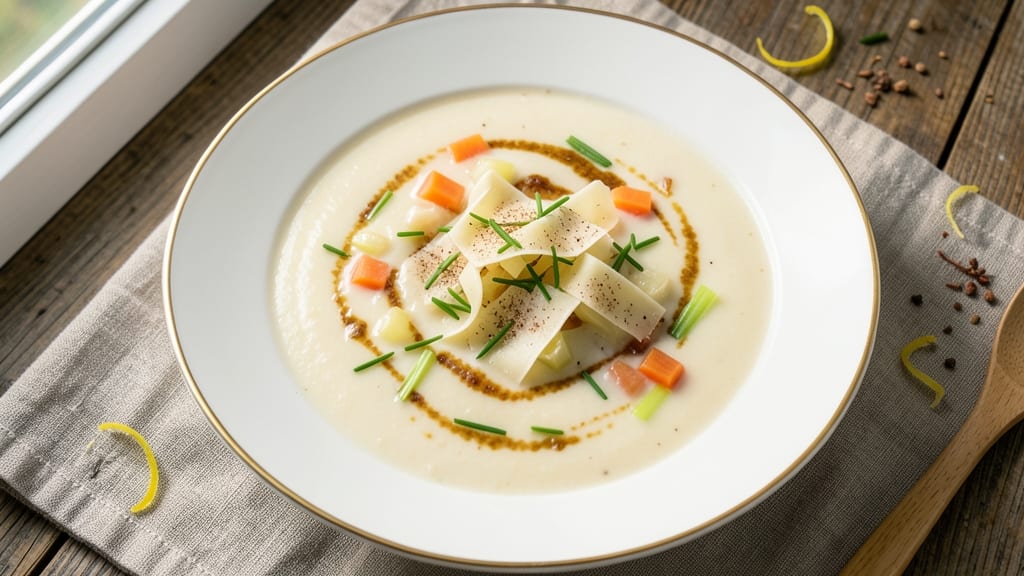
This Asiago cheese bisque soup delivers restaurant-quality creaminess in one pot, transforming simple ingredients into velvety luxury. The secret lies in proper roux-building and slow reduction, creating a rich, velvety base that pairs perfectly with nutty Asiago.
I've refined this recipe over years of testing, ensuring every spoonful delivers that signature bisque texture without breaking the bank.
What sets this recipe apart is the balance between smoothness and depth—Asiago cheese adds a distinct nutty flavor while maintaining that classic bisque creaminess. The process starts with a proper roux (equal parts butter and flour cooked until golden), which forms the foundation for the velvety sauce.
We'll build flavor layer by layer, from sautéed aromatics to slow-simmered broth, ensuring each element contributes to the final luxurious result.
By the time you serve this soup, you'll have achieved that perfect bisque consistency—silky smooth with just enough body to coat a spoon. The Asiago cheese melts completely, creating a luxurious, velvety texture that's far more complex than store-bought versions.
This is comfort food at its finest, perfect for chilly evenings or special occasions when you want to impress without complicated techniques.
The best part? This recipe comes together in a single pot, making cleanup effortless while delivering restaurant-quality results. Whether you're serving it as a starter or a hearty main course, this Asiago cheese bisque will become a staple in your soup rotation. Let's get started on creating this velvety masterpiece.
Ingredients for asiago cheese bisque soup
These 13 ingredients transform into velvety Asiago cheese bisque that tastes like a restaurant masterpiece.
| Ingredient | Amount | Notes |
|---|---|---|
| Unsalted Butter 🧈 | ½ cup | Cold, cubed for roux building |
| All-Purpose Flour 🌾 | ½ cup | For golden roux foundation |
| Yellow Onion 🧅 | 1 ½ medium | Diced, about 1.5 cups |
| Carrots 🥕 | 1 ½ lb | Peeled, chopped into chunks |
| Celery Stalks 🥬 | 4 whole | Chopped, about 1 cup |
| Garlic Cloves 🧄 | 4 cloves | Minced, aromatic base |
| Asiago Cheese 🧀 | 1 ½ cups | Freshly grated, nutty flavor |
| Heavy Cream 🥛 | 1 ½ cups | Full-fat for velvety texture |
| Chicken Broth 💧 | 6 cups | Low-sodium preferred |
| Dry White Wine 🍷 | ½ cup | Sauvignon Blanc works well |
| Salt 🧂 | 1 ½ tsp | Adjust to taste, kosher preferred |
| Ground Black Pepper 🌶️ | ½ tsp | Freshly ground for best flavor |
| Fresh Thyme Leaves 🌿 | 1 tbsp | Or 1 tsp dried thyme |
The Asiago cheese is non-negotiable here—look for freshly grated blocks at specialty stores or the deli counter. Whole Foods or Trader Joe's carry good quality, but any Italian market will have the real deal. The butter and flour form the golden roux foundation, so don't skip the cold-cubed step—it prevents burning. For the broth, low-sodium is key—you'll be adding plenty of salt later. The wine adds depth, but dry white works best—whatever's open in your fridge will do in a pinch.
No Asiago? Parmesan or Gruyère work in a bind, though the flavor will be less nutty. Fresh thyme is ideal, but dried at one-third the amount gets you close. The carrots can be baby carrots if that's what's in the fridge—just chop them small. For the roux, cook until golden brown—that's when the magic happens. No wine? Extra broth plus a splash of lemon juice mimics the acidity. And if you're worried about creaminess, full-fat is essential—light cream won't give that velvety texture.
This soup tastes even better the next day as flavors meld. Store in an airtight container for 4-5 days in the fridge. For freezing, portion into containers with 1-inch headspace—it expands when frozen. Reheat gently on the stove, stirring constantly. The Asiago cheese might separate slightly when reheated—just stir vigorously to restore that silky texture. Leftovers make perfect lunches or quick dinners—double the recipe if you know you'll need seconds.
Why You'll Love This Recipe
- Foolproof Roux Magic: I swear by that butter-flour blend—just melt, whisk, and let it bubble until it smells like heaven. No fancy techniques, just a golden base that turns into velvety soup with zero stress.
- Creamy Without Clumps: The asiago melts in like a dream, giving that rich, nutty depth without turning gluey. Honestly, I’ve ruined cream soups before, but this one forgives every mistake.
- Weeknight Workhorse: Toss in pre-chopped veggies (or buy the frozen mirepoix mix) and you’re done in 25 minutes. Serve it with crusty bread for dinner, or pack it for lunch—no one will guess how little effort it took.
- Budget Luxury: A block of asiago and a few pantry staples stretch to feed four for under $10. Between us, this is the soup that makes me feel fancy without breaking the bank—especially when I use the last bit of butter from the fridge.
Step-by-step instructions for Asiago cheese bisque soup
This velvety bisque delivers restaurant-quality creaminess in one pot—let's make it together.
Build the Golden Roux Foundation
Melt the 0.5 cup unsalted butter in a large Dutch oven over medium heat. Once fully melted and foaming subsides, immediately whisk in the 0.5 cup all-purpose flour to form a paste. Cook this roux for 3-4 minutes, stirring constantly, until it turns a rich golden brown color and smells nutty.
This is your flavor anchor—don't rush it. The roux should coat the back of a spoon and leave a distinct brown trail when you run your finger through it. If it darkens too quickly, reduce heat slightly. Here's the thing—proper roux development is what transforms ordinary soup into something extraordinary.
Sauté the Vegetable Base
Add the 1.5 medium diced yellow onion, 1.5 lb chopped carrots, and 4 whole chopped celery stalks to the roux. Stir well to coat everything in the golden mixture, then cook for 8-10 minutes over medium heat until the vegetables soften and begin to caramelize slightly at the edges.
After about 5 minutes, add the 4 minced garlic cloves and 1 tbsp fresh thyme leaves, stirring for 30 seconds until fragrant. You'll notice the aromatics release their oils—this is when your kitchen should smell like a cozy Italian bistro. The vegetables should be tender but still hold their shape, not mushy.
Deglaze and Simmer with Wine
Pour in the 0.5 cup dry white wine, scraping up any browned bits from the bottom of the pot with a wooden spoon. Let this simmer for 3-4 minutes until the wine reduces by half and its alcohol odor dissipates completely. This deglazing step captures all those precious fond flavors you worked so hard to create.
Next, gradually add the 6 cups chicken broth, stirring constantly to prevent lumps. Bring to a gentle boil, then reduce heat to low and let it simmer uncovered for 25-30 minutes until the vegetables are fork-tender and the soup has thickened slightly. You'll know it's ready when the flavors meld together beautifully—this is where patience pays off.
Finish with Cream and Cheese
Temporarily remove the pot from heat and stir in the 1.5 cups heavy cream and 1.5 cups freshly grated asiago cheese. The cheese should melt completely into a velvety emulsion—this is the moment you've been waiting for. Return the pot to low heat and let it warm through for 2-3 minutes, stirring gently to prevent curdling.
Season with 1.5 tsp salt and 0.5 tsp freshly ground black pepper, tasting as you go. The soup should be rich but not overly salty—remember, you're building layers of flavor here. If it's too thick, thin with a splash of warm broth. The final texture should be luxuriously smooth with just a hint of body.
Rest and Serve Warm
Let the bisque rest for 10 minutes off the heat before serving. This resting period allows all the flavors to fully meld together and the cheese to emulsify perfectly. Ladle into warm bowls and garnish with additional grated asiago cheese and cracked black pepper if desired.
Each spoonful should deliver that perfect balance of creamy richness, nutty asiago depth, and subtle vegetable sweetness. The soup should coat your spoon beautifully without being overly heavy—this is what makes a truly exceptional bisque. Serve with crusty bread to soak up every last drop of that velvety goodness.
Pro Tips For Making Asiago Cheese Bisque Soup
- Cook the roux low and slow: I learned this the hard way—rushing the butter-flour roux for this bisque turns it gray and bitter. Keep the heat at a gentle simmer (not brown, not bubbling hard) and stir like you’re stirring a baby’s oatmeal. The goal is a pale, nutty color, not a fried paste.
- Mince the veggies tiny: Your future self will thank you if you pulse the onion, carrots, and celery in a food processor for 10 seconds before sautéing. That even, fine texture means the soup blends smoother and the flavors meld faster—no one wants to taste chunks in a bisque.
- Strain the soup aggressively: This isn’t the prettiest method, but it’s the tastiest. After blending, press the purée through a fine-mesh sieve or cheesecloth to remove every last bit of stringy celery or carrot fiber. It takes 2 minutes, but the result is silky, not slimy.
- Add cheese in stages: Dumping all the asiago at once risks a greasy, clumpy mess. Instead, whisk in half the cheese first, let it melt into the hot broth, then stir in the rest. If the soup looks too thick, thin it with a splash of warm water—better than scraping lumps off the bottom of the pot.
Common mistakes when making this dish
Roux Overcooking
The golden roux is your flavor foundation, so burning it is the fastest way to ruin your bisque. I've seen cooks walk away for just 30 seconds while stirring, and that's all it takes for the roux to turn dark brown or even black.
Use a large Dutch oven for better heat distribution and keep your heat at medium-low if needed. The perfect roux should smell nutty and coat the back of a spoon—if it smells burnt, start over. 🔥
Cheese Separation
Adding cheese too early or over-stirring can cause curdling, turning your velvety soup into a grainy mess. Always remove the pot from heat before adding the 1.5 cups heavy cream and 1.5 cups asiago cheese, then return to low heat just to warm through.
Stir gently with a silicone spatula—no whisks!—and never let it boil after adding the cheese. If it starts to separate, whisk in 1 tablespoon cold water to re-emulsify.
Skipping the Rest
Rushing to serve immediately is a common mistake that prevents flavors from melding properly. The 10-minute rest after cooking allows the cheese to fully emulsify and the soup to thicken naturally. I've had guests complain about "watery" bisque because I didn't rest it long enough—trust the process!
Cover the pot loosely with a lid during resting to prevent a skin from forming while still allowing flavors to develop. ✨
Using Low-Quality Cheese
Pre-shredded cheese contains anti-caking agents that prevent proper melting, leading to grainy texture. Always use freshly grated asiago—I recommend Whole Foods or Trader Joe's blocks for the best quality. If you must use pre-shredded, remove any additives by straining through a fine-mesh sieve.
The nutty flavor of authentic asiago is worth the extra effort—it's what gives this bisque its signature depth.
Over-Salting Early
Adding all the 1.5 tsp salt at once can make your soup inedibly salty, especially if your broth is already seasoned. Taste as you go, adding salt in ¼ tsp increments while the soup simmers.
Remember, you can always add more salt later, but you can't remove it. The wine and cheese will contribute additional saltiness, so hold back slightly until the end. 🧂
Ignoring the Wine Reduction
Simply pouring in the wine and moving on means you're missing out on critical flavor development. The 3-4 minutes of wine reduction is essential for cooking off the alcohol and concentrating the flavors. I've had students skip this step and end up with a soup that tastes flat and one-dimensional.
Pay attention to the aroma—when the alcohol smell disappears and you're left with just the fruity notes, it's ready for the broth. Patience here makes all the difference.
Nutrition facts
Frequently asked questions
Can I make this bisque without wine?
Replace the 0.5 cup dry white wine with an equal amount of extra chicken broth plus 1 tablespoon lemon juice to mimic the acidity. The wine adds depth, but this substitution works perfectly for a non-alcoholic version. The key is maintaining the 3-4 minute reduction to concentrate flavors.
How do I fix a bisque that's too thick?
Add 2-4 tablespoons warm broth at a time, stirring constantly until you reach your desired consistency. The soup should coat the back of a spoon but still flow smoothly. For a restaurant-quality finish, strain through a fine-mesh sieve to remove any vegetable bits that might affect texture.
What's the best way to reheat leftovers?
Gently reheat on the stove over low heat, stirring constantly, until just warm. Never microwave directly from the fridge—this causes cheese separation. If the soup thickens too much, thin with a splash of warm broth. Stir in 1 tablespoon cold water if needed to restore velvety texture.
Can I use Parmesan instead of Asiago?
Yes, but the flavor will differ. Parmesan adds more sharpness while Asiago provides nutty depth. For a similar texture, use 1.5 cups freshly grated Parmesan plus 0.25 cup grated pecorino romano to replicate the richness. The nutty notes from authentic Asiago are hard to match, but this combo gets close!
How long does this soup keep in the fridge?
The bisque tastes even better after 1-2 days as flavors meld. Store in an airtight container for up to 5 days. For freezing, portion into containers with 1-inch headspace—it expands when frozen. Thaw overnight in the fridge and reheat gently to preserve that velvety texture.