
Appetizers
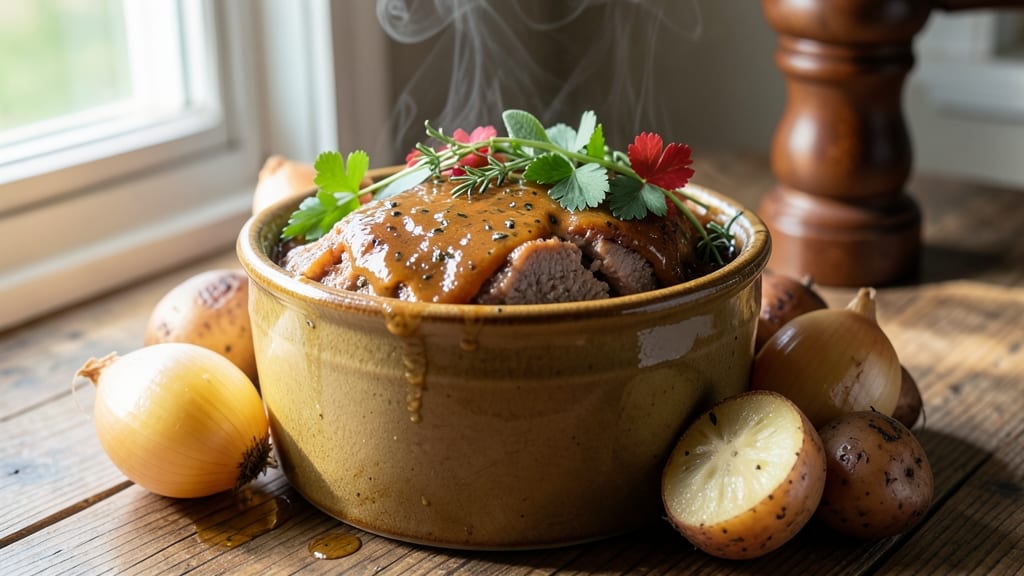
This Amish head cheese recipe brings hearty Midwestern tradition to your table with its rich, savory blend of pork, potatoes, and aromatic herbs. A dish rooted in Pennsylvania Dutch heritage, it transforms humble ingredients into a gelatinous loaf with crisp edges and tender, flavorful centers.
The method preserves meat efficiently while delivering restaurant-worthy depth in every slice.
The magic lies in simmering pork head meat until it falls apart, then blending it with potatoes and seasonings to create a thick, custard-like mixture. After shaping into a loaf and chilling overnight, the result is a firm yet tender texture that holds its shape when sliced.
The herbed crust adds a satisfying crunch that contrasts beautifully with the creamy interior.
Perfect for holiday gatherings or as a showstopping appetizer, this recipe delivers authentic Amish flavors without requiring specialized equipment. The slow-cooked broth infuses every bite with smoky richness, while fresh herbs and spices create layers of complexity that make it unforgettable.
Each slice reveals the perfect balance of meaty substance and velvety smoothness.
Serve chilled with mustard or horseradish for a traditional touch, or pair it with crusty bread to soak up every last bit of flavor. This dish proves that simple ingredients—when prepared with care—can create something truly extraordinary. Let’s get started on this timeless recipe.
Ingredients for amish head cheese
Pork head meat, aromatic herbs, and tender potatoes create this timeless Amish loaf with crisp crust and velvety interior.
| Ingredient | Amount | Notes |
|---|---|---|
| Pork Head Meat 🐷 | 4 lb | Freshly trimmed, skin removed |
| Yellow Onions 🧅 | 2 whole | Medium, sliced into half-moons |
| Russet Potatoes 🥔 | 3 lb | Peeled, boiled until tender |
| Fresh Parsley 🌿 | ½ cup | Chopped, stems removed |
| Fresh Sage 🌿 | ¼ cup | Chopped, leaves only |
| Fresh Thyme 🌿 | 1 tbsp | Leaves only, chopped |
| Bay Leaves 🍃 | 2 whole | Fresh preferred, dried okay |
| Black Peppercorns 🌶️ | 1 tbsp | Freshly cracked |
| Kosher Salt 🧂 | 2 tbsp | Diamond Crystal preferred |
| All-Purpose Flour 🌾 | ½ cup | For crust, sifted |
| Unsalted Butter 🧈 | ¼ cup | Cold, cubed |
| Whole Milk 🥛 | ½ cup | Full-fat for richness |
| Mustard Seeds 🌶️ | 1 tsp | Yellow or brown |
| Ground Allspice 🌶️ | ½ tsp | For warmth |
| Pork Gelatin 🧂 | 1 package | 1/4 cup powdered |
The pork head meat is the heart of this dish, and freshness is non-negotiable. Look for it at specialty butchers or Amish markets where it's often sold pre-cleaned. If you can't find pork head, pork shoulder works in a pinch—simmer it until it's falling apart, then proceed with the recipe. For the potatoes, Russets are ideal—their starch content creates that perfect creamy texture. Boil them whole, then mash them while hot for smoothness. The herbs should be vibrant; fresh parsley and sage from the grocery store's produce section are fine, but if they're wilted, skip them and double the dried versions.
No fresh herbs? Dried parsley and thyme at half the amount will work, though the flavor won't be as bright. Substituting pork shoulder for head meat requires extra simmering time—2-3 hours minimum—to achieve the same tender texture. For the crust, if you're avoiding gluten, almond flour can replace half the all-purpose flour, though the texture will differ slightly. The mustard seeds add a subtle kick; if you prefer milder flavor, omit them entirely. For the gelatin, unflavored powdered gelatin is best—it dissolves completely and doesn't leave a grainy texture. If you're making this ahead, prepare the mixture up to the shaping step and refrigerate overnight.
This dish is best made a day ahead—the flavors meld beautifully after chilling. Store the shaped loaf in an airtight container in the fridge for up to 5 days, or freeze for 3 months. To serve, slice it with a sharp knife while still cold for clean cuts. The crust can be reheated briefly in the oven if you prefer it warm, but traditionalists serve it chilled. For leftovers, wrap slices in parchment paper and reheat in a 350°F oven for 10-12 minutes to restore the crisp edges. The gelatin-rich mixture makes this perfect for potlucks—it holds its shape when sliced and transports well.
Why You'll Love This Recipe
- One-Pot Wonder: I swear by this—just toss the pork head meat, onions, and potatoes into a pot, simmer, and let the flavors meld. No chopping, no fuss, and that rich broth? It basically cooks itself.
- Herb-Packed Depth: The sage and parsley don’t just garnish—they infuse every bite with earthy warmth. That crispy onion top? Pure satisfaction, like a hug in food form.
- Leftovers That Shine: This isn’t one of those dishes that gets sad in the fridge. Reheat it, slice it thin, and serve it cold on bread the next day. My kids beg for it—yes, even after the first night.
- Budget-Friendly Feast: Pork head meat stretches further than you’d think, and potatoes soak up all the flavor. Honestly, it’s the kind of meal that makes grocery day feel like a win.
Step-by-step instructions for savory pork and potato loaf with herbed crust
A traditional Amish head cheese delivers rich, gelatinous texture and deep savory flavors. This method transforms humble ingredients into a showstopping centerpiece.
Prepare the Pork and Potato Base
Begin by thoroughly cleaning the 4 lb pork head meat, removing any remaining skin and trimming excess fat. Place the meat in a large stockpot and cover with cold water by about 2 inches. Add the 2 whole yellow onions, 2 whole bay leaves, 1 tbsp black peppercorns, and 2 tbsp kosher salt. Bring to a boil over high heat, then immediately reduce to a gentle simmer.
Simmer uncovered for 3-4 hours until the pork is fork-tender and the meat easily separates from the bone. Skim any foam that rises to the surface during cooking. Meanwhile, peel the 3 lb russet potatoes and boil them in salted water until completely tender (15-20 minutes). Drain both the pork and potatoes thoroughly.
Create the Herb-Infused Gelatin Mixture
In a large mixing bowl, combine the cooked pork and potatoes, breaking them into ¼-inch chunks with your hands or a fork. Add the 0.5 cup fresh parsley, 0.25 cup fresh sage, 1 tbsp fresh thyme, 1 tsp mustard seeds, and 0.5 tsp ground allspice. Mix thoroughly to distribute the herbs evenly throughout the meat mixture.
In a separate bowl, whisk together the 1 package pork gelatin with the 0.5 cup whole milk until completely dissolved. Slowly pour this mixture over the pork and potato combination while stirring continuously. The gelatin will begin to thicken the mixture as it absorbs the liquid. Let this sit for 10 minutes to allow the gelatin to fully activate.
Form and Chill the Loaf
Transfer the pork mixture to a 9x5-inch loaf pan that has been lightly greased with 2 tablespoons of the 0.25 cup unsalted butter. Press the mixture firmly into the pan, creating an even surface. Cover with plastic wrap and refrigerate for at least 4 hours, or preferably overnight. This chilling period is crucial for the gelatin to set properly and develop the signature head cheese texture.
While the loaf chills, prepare the herbed butter crust by combining the remaining 0.25 cup unsalted butter with the 0.5 cup all-purpose flour in a small bowl. Rub this mixture between your fingers until it forms a coarse crumbly texture. Sprinkle this evenly over the chilled loaf, pressing gently to adhere.
Bake to Golden Perfection
Preheat your oven to 350°F. Bake the loaf uncovered for 45-50 minutes until the crust is deep golden brown and the internal temperature reaches 160°F when measured in the center. The crust should be crisp and fragrant with herb notes, while the interior remains moist and gelatinous.
Remove from the oven and let rest for 10 minutes before carefully inverting onto a serving platter. The loaf should hold its shape when turned, revealing a rich, glossy interior. Serve warm or at room temperature with crusty bread or pickled vegetables for an authentic Amish meal experience.
Pro Tips For Making Amish Head Cheese
- SIMMER LOW AND SLOW: The pork head meat needs time—think at least 3 hours on low heat, or you’ll end up with dry, stringy scraps instead of tender, falling-apart texture. I used to rush it, and the results were sad until I accepted this isn’t a 30-minute meal.
- PEEL POTATOES THIN: Russets hold moisture like sponges, but you want them creamy, not soggy. Shave them paper-thin with a mandoline or sharp knife—this cuts cooking time and keeps them from falling apart into mush.
- DON’T SKIP THE BROTH: The onions and pork alone won’t make enough liquid. Use at least 2 cups of broth (chicken or beef works) to keep everything moist. I learned this after my first batch turned out like a gluey loaf—no one wants that.
- SAUTE THE HERBS FIRST: Toast the sage and parsley in butter for 30 seconds before adding them to the mix. The flavors deepen instantly, and you avoid the sad, wilted herbs that just float on top. (Yes, it smells like heaven while it cooks.)
Essential equipment for amish head cheese
Stockpot Essentials
The heart of this recipe is a large, heavy-bottomed stockpot—I recommend a 6-8 quart model like the All-Clad Stainless Steel Stockpot. This size ensures enough room for the pork head and onions to simmer comfortably without overflowing.
A stockpot with a tight-fitting lid helps retain moisture during the 3-4 hour simmer, preventing excessive evaporation. If you don’t have a dedicated stockpot, a Dutch oven works too, though it may require more frequent skimming of foam. 🔥
Mixing and Mashing Tools
For blending the pork and potatoes, grab a large mixing bowl (at least 8-quart capacity) and a wooden spoon or rubber spatula—these prevent scratching nonstick surfaces if you’re using a bowl that doubles as a baking dish later.
A potato masher or fork works best for breaking down the potatoes into ¼-inch chunks without over-mashing into a paste. I also keep a fine-mesh strainer handy for rinsing fresh herbs if needed. 🥔
Loaf Pan and Chilling Setup
A 9x5-inch loaf pan is non-negotiable for shaping—look for one with nonstick coating to prevent sticking, like the Wilton Professional Nonstick Loaf Pan. For chilling, I use plastic wrap pressed directly onto the surface to create a smooth top.
If you’re short on time, a freezer-safe container works too, though it may require extra pressing to remove air bubbles. A meat thermometer (like the Thermoworks Thermapen) ensures the gelatin sets properly by confirming the mixture reaches 160°F before baking. ❄️
Baking and Crust Tools
Preheat your oven with a wire cooling rack placed on the middle rack—this helps the crust crisp evenly. For the herbed butter crust, I use a small mixing bowl and my fingers to crumble the flour-butter mixture into coarse crumbs.
A pastry brush comes in handy for lightly coating the loaf pan with 2 tbsp melted butter before adding the filling. If you’re feeling fancy, a bench scraper helps spread the crust evenly without tearing. 🧈
Knife and Serving Gear
A sharp chef’s knife (like the Wüsthof Classic) is essential for slicing clean, even portions—dull knives crush the gelatinous texture. For serving, I arrange slices on a wooden cutting board or slate serving tray to highlight the rustic charm.
A small bowl for mustard or horseradish on the side completes the presentation. Pro tip: Wipe your knife between slices to prevent sticking. 🍽️
Nutrition facts
Frequently asked questions
Why does this recipe use pork head meat instead of regular pork?
Pork head meat delivers the signature gelatinous texture that makes Amish head cheese so special. The collagen-rich connective tissue breaks down during simmering, creating that rich, custard-like consistency. Regular pork cuts lack this natural gelatin content, which is why traditional recipes specify pork head or neck. The flavor is also more concentrated, giving each bite deep savory notes.
Can I make this recipe without pork gelatin?
Yes, but the texture will differ significantly. Substitute with 1/4 cup unflavored powdered gelatin (like Knox) or 2 tbsp cornstarch mixed with 1/4 cup cold water. The gelatin version creates a firmer set that holds its shape when sliced, while cornstarch yields a softer, more pudding-like consistency. For best results, use pork gelatin if available.
How do I prevent the loaf from falling apart when slicing?
Proper chilling is key—refrigerate the shaped loaf for at least 4 hours (overnight is ideal). Press plastic wrap directly on the surface to create a smooth top. When ready to slice, use a sharp knife and wipe it between cuts. If it still crumbles, the gelatin may not have set fully—try chilling longer or increasing gelatin by 1/2 tsp. A warm oven (350°F for 10 minutes) before slicing can help firm it up too.
What's the best way to serve Amish head cheese?
Traditionally, it's served chilled with mustard or horseradish on the side for dipping. Pair it with crusty bread, pickled vegetables, or a simple green salad. For a festive touch, arrange slices on a wooden board with fresh herbs. Some Amish families serve it as part of a holiday meat platter alongside other preserved meats. Warm slices work too—reheat in a 350°F oven for 10-12 minutes to restore crispness.
Can I make this ahead of time?
This dish actually tastes better the next day! Prepare the mixture up to the shaping step, then refrigerate overnight. The flavors meld beautifully during chilling. For storage, keep the shaped loaf (with or without crust) in an airtight container for up to 5 days. Freeze for 3 months by wrapping tightly in plastic and foil. Thaw overnight in the fridge before serving.